

malaysia traditional food Key Takeaways
Malaysia traditional food is a vibrant mosaic of Malay, Chinese, and Indian culinary traditions, shaped by centuries of trade and cultural exchange.
- Malaysia traditional food reflects a harmonious blend of Malay, Chinese, and Indian influences, with each dish carrying distinct regional variations.
- Nasi lemak, rendang, and satay are widely regarded as the country’s most iconic offerings, with unique preparation methods and cultural significance.
- Understanding local dining etiquette and regional specialties elevates the experience, whether you are eating at a hawker centre or a home kitchen.
What Makes Malaysian Cuisine So Unique?
Malaysian cuisine stands apart because it does not belong to a single culture. It is a living conversation between the Malay Archipelago, southern China, and the Indian subcontinent. The result is a repertoire of dishes that balance spicy, sour, sweet, and savoury flavours in almost every bite. Street food culture is deeply embedded in daily life, with pasar malam (night markets) and kopitiams (traditional coffee shops) serving as unofficial community dining rooms. Key ingredients such as coconut milk, lemongrass, tamarind, and belacan (shrimp paste) appear repeatedly across recipes, creating a cohesive flavour identity despite the diversity. For a related guide, see Malaysian Food 101: 7 Must-Try Dishes for First-Timers.
7 Popular Malaysian Dishes You Need to Know
These seven dishes represent the heart of malaysia traditional food. Each one has a story, a preferred regional style, and a place in everyday life.
1. Nasi Lemak — The National Dish
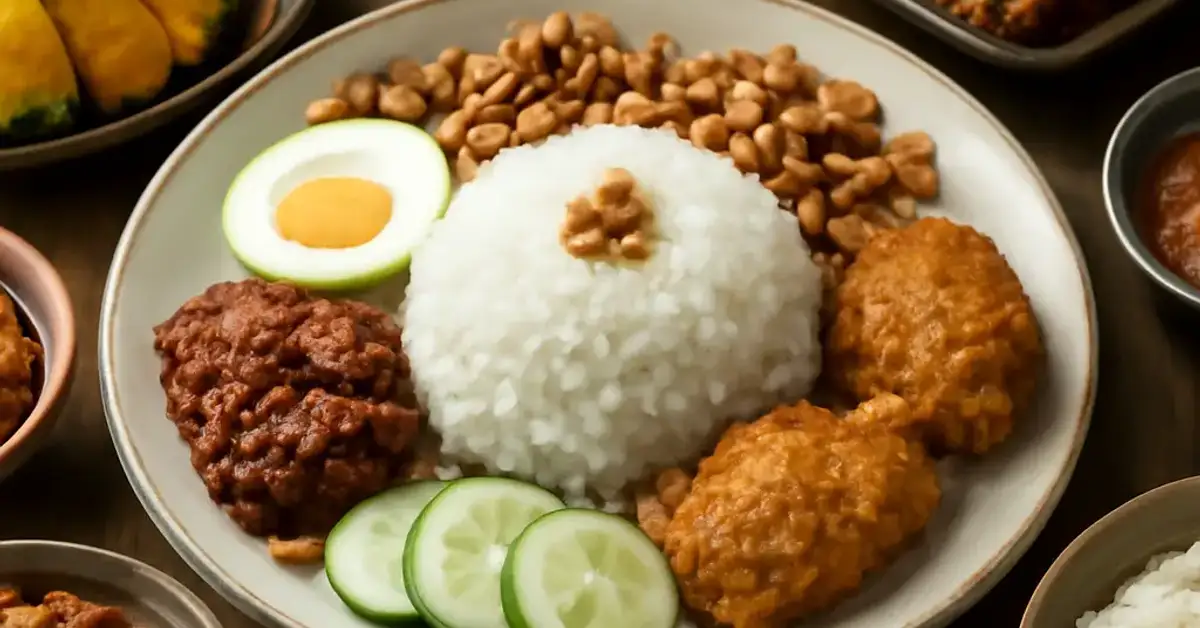
Nasi lemak is undeniably the most famous popular malaysian dish. It consists of fragrant rice cooked in coconut milk, served with spicy sambal, crispy anchovies, toasted peanuts, boiled egg, and a slice of cucumber. While it is commonly eaten for breakfast, you will find it available at any time of day from roadside stalls to chain restaurants.
Regional variations exist — in Negeri Sembilan, the sambal is darker and richer with more caramelised onion; in Kelantan, nasi lemak is often wrapped in banana leaf and served with a side of fried chicken. The dish’s cultural significance goes beyond food: it is a symbol of Malay heritage and unity.
2. Rendang — Slow-Cooked Spiced Meat
Rendang originated from the Minangkabau people of Sumatra and crossed the strait to become a signature of Malay cooking in Malaysia. The meat, usually beef or chicken, is slowly simmered in coconut milk and a spice paste of ginger, galangal, turmeric, lemongrass, garlic, and chillies. The dish is cooked until the liquid almost completely evaporates, leaving a thick, intensely flavoured coating around each piece.
In Johor, rendang tends to be slightly wetter and sweeter, while Negeri Sembilan prefers a drier, more heavily spiced version. Rendang is often served during festive occasions such as Hari Raya Aidilfitri and is considered a dish that requires patience and skill.
3. Satay — Grilled Skewers with Peanut Sauce
Satay consists of marinated pieces of chicken, beef, or lamb threaded onto bamboo skewers and grilled over hot coals. The marinade typically includes lemongrass, turmeric, and coconut milk, which gives the meat a tender texture and aromatic finish. The dipping sauce is a thick, slightly sweet peanut and chilli paste that perfectly complements the charred exterior.
Satay is a communal food, often ordered in large quantities for gatherings. The best satay is found at specialist stalls in Kajang, Selangor, a town synonymous with satay since the early 20th century. In Terengganu, satay is sometimes made with minced meat mixed into a paste, a variation worth trying.
4. Laksa — Tangy Noodle Soup
Laksa is a broad category of noodle soups that vary dramatically from state to state. The two most famous versions are Asam Laksa from Penang and Laksa Lemak from the east coast. Asam Laksa uses a tamarind-based fish broth, shredded mackerel, and thick rice noodles, topped with cucumber, onion, pineapple, and a generous dollop of shrimp paste (petis). The flavour is sour, fishy, and refreshing.
Laksa Lemak, also called Curry Laksa, features a rich coconut milk broth infused with curry spices, served with vermicelli noodles, tofu puffs, prawns, and cockles. In Sarawak, Laksa Sarawak is a distinct version with a thinner, spicier broth that uses sambal belacan and coconut cream, often topped with an omelette strip and lime.
5. Char Kway Teow — Stir-Fried Flat Noodles
Char Kway Teow is a Hokkien-style noodle dish that has become a staple across the country. Flat rice noodles are stir-fried over high heat with dark soy sauce, prawns, Chinese sausage (lap cheong), bean sprouts, chives, and cockles. The key to its distinctive flavour is “wok hei” — the smoky breath of the wok that only intense heat can produce.
Penang is widely considered the birthplace of the best char kway teow, where the dish is made slightly sweeter and with more cockles. In Kuala Lumpur, you may find a version with added egg and a lighter colour. A well-made char kway teow is not greasy but glossy, with each noodle separated and coated.
6. Roti Canai — Flaky Flatbread
Roti canai is a descendant of Indian paratha, brought to Malaysia by Indian Muslim migrants. The dough is repeatedly stretched, folded, and oiled to create dozens of thin layers, then cooked on a flat griddle until golden and crispy on the outside, soft and chewy inside. It is typically served with dhal (lentil curry) or a side of curry sauce.
In Penang, roti canai is often eaten with sugar or condensed milk for a sweet breakfast. In Kuala Lumpur, you can find roti canai stuffed with egg, onion, or even cheese. The mamak (Indian Muslim) stalls that serve roti canai are open 24 hours in many urban areas, making it a go-to comfort food at any hour.
7. Cendol — Icy Dessert with Palm Sugar
Cendol is the quintessential Malaysian dessert, especially popular during hot afternoons. It features shaved ice topped with green rice flour jelly (cendol), coconut milk, and a generous drizzle of gula Melaka (palm sugar syrup). Red beans, sweet corn, and glutinous rice are sometimes added for texture.
The quality of a cendol depends almost entirely on the gula Melaka. Authentic cendol uses unrefined palm sugar with a deep, caramel-like bitterness that balances the creaminess of the coconut milk. Penang’s famous cendol at Joo Hooi Cafe remains a benchmark, while Malacca takes pride in its exceptionally thick and aromatic gula Melaka produced locally.
Regional Variations in Malaysian Traditional Food
Malaysia traditional food changes character as you move across the country. Understanding these regional differences helps you order with confidence.
Peninsular West Coast (Penang, Perak, Selangor)
The west coast is heavily influenced by Peranakan (Straits Chinese) and Indian Muslim cooking. Dishes tend to be sweeter and richer, with more coconut milk and sugar. Assam Laksa from Penang and Nasi Kandar from Penang are prime examples. The abundance of seafood here also means more prawns, squid, and fish appear in everyday meals.
Peninsular East Coast (Kelantan, Terengganu, Pahang)
On the east coast, malaysian cuisine is more distinctly Malay, with less Indian influence. Dishes are often heavier on coconut milk and turmeric, and they tend to be milder in spice compared to the west coast. Nasi Kerabu (blue rice with herbs) and Gulai Tempoyak (fish in fermented durian sauce) are specialities rarely found elsewhere.
East Malaysia (Sabah and Sarawak)
Borneo introduces indigenous influences into the malaysian cuisine landscape. Sarawak Laksa, Linopot (pounded tapioca leaves with anchovies), and Hinava (a Kadazan raw fish salad) showcase local ingredients like bamboo shoots, wild ferns, and freshwater fish. The use of fermented bamboo shoots (tuak) and wild ginger is distinctive to this region.
Dining Etiquette: How to Eat Like a Local with Malaysia Traditional Food
Eating malaysia traditional food like a local goes beyond choosing the right dishes. Observing a few simple customs shows respect and enriches the experience.
- Use your right hand for eating with your hands. In Malay culture, eating with the left hand is considered unclean. When eating nasi lemak or nasi kandar, knead the food into a small ball using only your right fingertips before bringing it to your mouth.
- Wait for the eldest person to start eating before you begin, especially at a family meal or formal gathering.
- Always remove your shoes before entering a Malay or Indian home. Many traditional restaurants also expect this if you are dining in a carpeted area.
- Do not point with your index finger at food or people. Use your thumb instead when indicating a dish you want.
- Sharing is normal. Many dishes like rendang, curry, and stir-fried vegetables are placed in the centre of the table and shared among everyone.
Useful Resources
For a deeper dive into the history of nasi lemak and its evolution, visit Britannica’s entry on nasi lemak. To explore the science behind wok hei in Char Kway Teow, read Serious Eats’ explanation of wok hei.
Frequently Asked Questions About malaysia traditional food
What is the most popular malaysia traditional food ?
Nasi lemak is widely considered the most popular malaysia traditional food and is recognised as the national dish of Malaysia.
Is malaysian cuisine very spicy?
Some dishes are spicy, but many are mild. Laksa, rendang, and sambal-based dishes can be hot, while nasi lemak and roti canai are available in mild versions.
What are the main influences on malaysian cuisine ?
Malay, Chinese, Indian, Peranakan, and indigenous Bornean influences shape the country’s food culture.
Where can I try authentic malaysia traditional food ?
Hawker centres, pasar malam (night markets), and kopitiams (traditional coffee shops) are the best places for authentic street food.
Is halal food common in Malaysia?
Yes, most Malay and Indian Muslim stalls serve halal food, and many Chinese restaurants also offer halal-certified options in major cities. For a related guide, see 7 Best Pasar Eatai Chinese Muslim Food Dishes You Must Try.
What is the difference between nasi lemak and nasi kandar?
Nasi lemak is coconut milk rice served with sambal and sides, while nasi kandar is steamed rice paired with a variety of curries and side dishes.
What is the best time to eat popular malaysian dishes ?
Breakfast is ideal for nasi lemak and roti canai, lunch for laksa and char kway teow, and dinner for satay and rendang.
Is street food safe to eat in Malaysia?
Yes, generally safe, especially at busy stalls with high turnover. Look for clean preparation and cooked-to-order dishes.
What drink pairs well with malaysia traditional food ?
Teh tarik (pulled milk tea) is the classic pairing. Iced milo and sugarcane juice are also popular choices.
What is the spiciest popular malaysian dish ?
Mee goreng mamak and asam laksa are considered among the spiciest, though sambal can make even a simple rice dish very hot.
Do I need to tip in Malaysian restaurants?
Tipping is not expected in street stalls or casual eateries. A 10% service charge is usually included in higher-end restaurants.
What is gula Melaka?
Gula Melaka is unrefined palm sugar from Malacca, known for its deep caramel flavour and used in cendol and many desserts.
Can I find vegetarian options in malaysian cuisine ?
Yes, especially in Chinese vegetarian (zhai) stalls and Indian banana leaf restaurants. Roti canai and some noodle dishes can be ordered without meat.
What is belacan?
Belacan is fermented shrimp paste, a core ingredient in sambal and many Malay dishes. It has a strong, savoury flavour.
What is the difference between laksa lema and asam laksa?
Laksa lemak has a coconut milk-based, creamy curry broth. Asam laksa uses a tamarind-based, sour fish broth without coconut milk.
Are there regional versions of satay?
Yes. Kajang satay is the most famous, but Terengganu also offers a distinctive minced-meat version.
What is the most famous food in Penang?
Penang is best known for asam laksa, char kway teow, and cendol, which are all considered benchmark versions of these dishes.
How do Malaysians typically serve rendang?
Rendang is served with plain steamed rice, ketupat (rice cakes), or lemang (glutinous rice in bamboo tubes) during festive occasions.
What fruit is commonly used in savory dishes in malaysian cuisine ?
Pineapple, mango, and papaya are used in salads and sambals. Unripe jackfruit and banana blossom are also used in curries.
Is it possible to take cooking classes for malaysian cuisine ?
Yes, cooking classes are widely available in Kuala Lumpur, Penang, and Malacca. They typically cover nasi lemak, rendang, and curry dishes.