

Kuala Lumpur food guide Key Takeaways
Kuala Lumpur and #8217;s food scene is a melting pot of Malay, Chinese, and Indian influences, layered with history from the Peranakan (Nyonya) and colonial eras.
- You and #8217;ll discover the seven essential dishes every first-timer must try and #8212; from nasi lemak to cendol.
- Learn where locals actually eat, including hidden hawker stalls and iconic restaurants.
- Get a sample three-stop food crawl itinerary perfect for a single evening in the city.
Why This Kuala Lumpur Food Guide Matters for First-Time Visitors
Kuala Lumpur’s food scene is a melting pot of Malay, Chinese, and Indian influences, layered with history from the Peranakan (Nyonya) and colonial eras. For a first-timer, it’s easy to stick to hotel buffets or tourist-heavy malls and miss the real action. This guide focuses on dishes that define the city, explains what makes each unique, and points you to stalls and restaurants that locals love. Whether you have 48 hours or a full week, you’ll leave KL having eaten like a true Kuala Lumpur foodie. For a related guide, see Malaysian Food 101: 7 Must-Try Dishes for First-Timers.
Malay Classics: The Heart of Kuala Lumpur Food for First-Time Visitors
Malay cuisine is aromatic, spicy, and deeply comforting. These dishes are the backbone of the local food identity and the easiest place to start your culinary exploration.
Nasi Lemak — The National Dish You’ll Crave
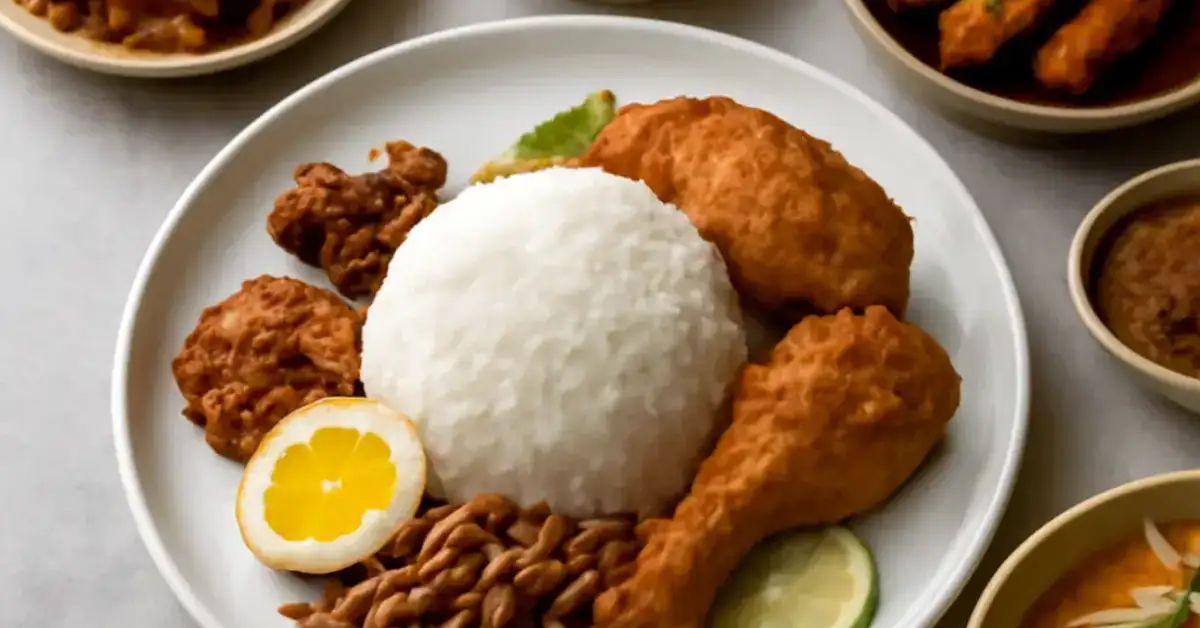
Fragrant coconut rice served with sambal (spicy chili paste), crispy anchovies, roasted peanuts, boiled egg, and a slice of cucumber. It’s humble, addictive, and available everywhere from street carts to upscale cafés.
Where to try it: Village Park Restaurant in Damansara Utama is legendary for its fried chicken nasi lemak. Expect a queue, but it moves fast.
Satay — Skewers of Smoky Perfection
Marinated chicken or beef skewers grilled over charcoal, served with a rich peanut sauce, ketupat (compressed rice cakes), and fresh cucumber slices. The secret is the char — that slight smokiness makes all the difference.
Where to try it: Restoran Haji Samuri in Bangsar has been grilling satay for decades and consistently nails the balance of sweet and savory.
Rendang — Slow-Cooked Beef That Defines Comfort
Tender beef simmered for hours in coconut milk and a paste of lemongrass, galangal, turmeric, and chili. Dry and intensely flavored, rendang tastes even better the next day. It’s often served with rice or wrapped in a lemang (bamboo tube rice) during festive seasons.
Where to try it: Saz Kitchen at Jalan Sultan serves a superb Nasi Kandar-style rendang where you choose your sides from a steam table.
Chinese and Indian Treasures: The Best Food in KL You Can’t Miss
Kuala Lumpur’s Chinese and Indian communities have shaped its food landscape with noodle dishes, curries, and breads that are now local icons.
Char Kuey Teow — Flat Rice Noodles Wok Hei Style
Stir-fried flat rice noodles with shrimp, cockles (optional), Chinese sausage, egg, and bean sprouts, all tossed in dark soy sauce over high heat. The magic is the “wok hei” — the breath of the wok that gives the noodles a smoky, charred flavor.
Where to try it: Siam Ban Restaurant in Pudu serves a clean version with less oil but full wok hei. For a street-style fix, head to the hawker stalls at Jalan Alor.
Roti Canai — Flaky Flatbread That Steals the Show
It looks simple: a thin, crisp-on-the-outside, soft-on-the-inside flatbread. But good roti canai takes years to master. Eaten with dhal (lentil curry) or fish curry, it works for breakfast, lunch, or a late-night snack.
Where to try it: Pelita Nasi Kandar (multiple branches) makes a roti canai that’s reliably flaky and buttery. Order a roti telur (with egg) for extra indulgence.
Banana Leaf Rice — A Feast That Teaches You How to Eat
Steamed rice is served on a banana leaf, surrounded by three to four vegetable curries, rasam (tamarind soup), pickles, and papadams. You mix everything with your right hand (it’s traditional) and scoop up the flavors.
Where to try it: Kannathass Restaurant in Brickfields is a historic spot that serves an authentic banana leaf meal. Go on a Sunday for the extended menu.
Kuala Lumpur Street Food: Hawker Centers and Night Markets
No Kuala Lumpur food guide is complete without the street food experience. Hawker centers and pasar malams (night markets) are where locals grab quick bites after work or on weekends.
Jalan Alor — The Street Food Epicenter
A whole street lined with open-air stalls and tables. By night, it buzzes with charcoal grills, sizzling woks, and the smell of satay. Try the grilled stingray (ikan bakar) slathered in sambal, and wash it down with sugarcane juice. It’s touristy but still feels authentic because the food is genuinely good.
Pasar Malam (Night Market) Adventures
Rotating every day to a different neighborhood, a pasar malam is a mobile feast. Look for apam balik (crispy peanut pancake), curry puffs, and fried banana fritters. The most accessible for first-timers is the SS2 Pasar Malam (Monday) in Petaling Jaya: massive, well-organized, and packed with family-run stalls.
Sweet Endings: Must-Try Dishes in Kuala Lumpur for Dessert Lovers
Malaysian desserts lean on coconut milk, palm sugar (gula melaka), and tropical fruits. Two stand out for first-timers.
Cendol — The Cooler That Saves You from the Heat
Shaved ice topped with green rice flour jelly, sweetened red beans, creamed coconut milk, and a generous drizzle of gula melaka (palm sugar syrup). It’s refreshing, not too sweet, and wildly addictive. Classic versions come from hawker stalls; fancy versions get durian or ice cream upgrades.
Where to try it: Tongras Cafe in Jalan Dewan Sultan Sulaiman serves a traditional Nyonya-style cendol with home-made gula melaka.
Ice Kacang (ABC) — The Shaved Ice Masterpiece
Also known as Air Batu Campur (ABC), this towering shaved ice dessert hides a treasure trove of sweet corn, red beans, jelly, grass jelly, and syrup, then gets a crown of evaporated milk and durian or chocolate sauce. Every stall has a secret syrup recipe.
Practical Tips for Following This Kuala Lumpur Food Guide
Before you dive in, keep these practical points in mind to eat like a local and avoid common pitfalls.
Hawker Etiquette: The Unwritten Rules
Many stalls expect you to find a seat first and order using your table number. At busy places, share tables with strangers — it’s normal. Cash is still king at street stalls, though some hawker centers now accept GrabPay or Touch ‘n Go e-wallet.
Spice Tolerance: Start Low, Go Slow
Malaysian food can pack serious heat. Start with milder versions of dishes (ask for “kurang pedas” — less spicy) and build up. The sambal at nasi lemak and the curry at banana leaf rice can surprise you.
Hygiene and Safety
Stick to stalls with a high turnover — that means the food is fresh. Look for the cleanliness grade (A, B, or C) displayed at many eating places. Drink bottled or boiled water; avoid tap water.
Sample One-Night Food Crawl Itinerary
Here’s a manageable three-stop crawl for your first evening, covering a range of flavors without rushing.
| Stop | Location | What to Try | Budget (MYR) |
|---|---|---|---|
| 1 | Jalan Alor | Grilled stingray (ikan bakar) + sugarcane juice | 15-25 |
| 2 | Pelita Nasi Kandar (nearby branch) | Roti canai telur + Teh Tarik | 8-12 |
| 3 | Tongras Cafe | Cendol with gula melaka | 6-10 |
Walk between stops — the distances are short and the streets are lively. Total cost for one person: about 30-50 MYR ($7-12 USD), making it an incredible food experience for the price.
Useful Resources
For deeper dives into specific dishes and the cultural context of Malaysian cuisine, check out these trusted resources.
Nyonya Chronicles offers detailed explanations of Peranakan cooking techniques and recipes, which connect directly to the Nyonya food you’ll encounter in KL.
Malaysian Flavours is a comprehensive blog covering hawker reviews, market guides, and recipes from every state, with practical tips for travelers.
Frequently Asked Questions About Kuala Lumpur food guide
What is the best time of day to eat street food in Kuala Lumpur?
Evening from around 6 PM to 10 PM is peak street food time. Hawker stalls and night markets come alive after sunset, offering the widest selection and the most vibrant atmosphere.
Is Kuala Lumpur street food safe to eat?
Yes, when you choose stalls with high customer turnover and visible cleanliness grades (A or B). Stick to cooked food, avoid raw items in uncertain places, and drink bottled water.
Do I need to tip at hawker stalls or restaurants?
Tipping is not customary in Malaysia and is not expected at hawker stalls. Some upscale restaurants include a 10% service charge in the bill, which covers the tip.
How much money should I budget for food per day in KL?
A budget of 40-80 MYR ($9-18 USD) per day covers three meals and drinks at hawker centers and local restaurants. You can eat well on the lower end if you stick to street food.
Which area is best for first-time food tourists in KL?
Bukit Bintang and the area around Jalan Alor is the most convenient hub. It offers concentrated street food, easy public transport, and proximity to many hotels.
What is the spiciest dish I should try in Kuala Lumpur?
Nasi kandar curries can be surprisingly hot. The most intense dishes are often the sambal-based ones like sambal udang (prawns in sambal) or the local-style tom yam. Always ask for “kurang pedas” (less spicy) if you’re sensitive.
Are there vegetarian options in this food guide?
Yes. Roti canai (plain version without egg) is vegetarian. Banana leaf rice normally includes vegetable curries. Cendol and many Indian stalls offer vegetarian-friendly dishes. For strict vegans, inform the seller that you avoid eggs and dairy.
What are the must-try drinks to pair with street food?
Teh Tarik (pulled milk tea) is the iconic local drink. Sugarcane juice, fresh coconut water, and lime juice (limau ais) are refreshing and cheap options that cut through spicy food.
Can I find halal food easily in Kuala Lumpur?
Absolutely. The majority of Malay and Indian Muslim stalls and restaurants are halal. Chinese stalls may or may not be halal; look for the halal certification logo or ask the vendor.
Should I book restaurant tables in advance?
For popular spots like Village Park or Pelita, expect a queue at peak times but no booking is needed. For high-end restaurants or Nyonya restaurants, booking a day ahead is recommended, especially on weekends.
How do I order at a hawker stall if I don and #8217;t speak Malay?
Most stall owners in central areas speak basic English. Pointing at what others are eating and saying “satu” (one) plus the dish name works perfectly. Common phrases: “sedap” (delicious) and “berapa” (how much).
What is the best way to pay at street food stalls?
Cash is still the most widely accepted form of payment at hawker stalls and pasar malams. Some larger stalls now accept GrabPay or Touch ‘n Go e-wallet, but always have small bills handy.
Are there any food tours tailored for this Kuala Lumpur food guide ?
Yes, several local operators offer guided street food tours that visit Jalan Alor, Kampung Baru, and Chinatown. These tours provide context and help you avoid the less authentic stalls. Search for “KL street food tour” on reputable platforms.
What should I avoid eating as a first-time visitor?
Avoid raw or undercooked shellfish at unknown stalls, unpeeled fruit if you are not sure about water wash quality, and street-side ice that may be made from tap water. Stick to cooked and hot food.
Is it safe to eat from stalls that use colorful tableware?
Yes, many hawker stalls use standard melamine or stainless steel bowls. The color of the tableware is not an indicator of hygiene. Focus on turnover and cleanliness of the stall itself.
What is the most photogenic dish in Kuala Lumpur?
Ice Kacang (ABC) with its towering shaved ice and rainbow syrups is the most photo-worthy. Cendol with its green jelly and white coconut milk also looks beautiful on camera.
Can I find authentic Nyonya food easily?
Yes, especially in areas like Jalan Dewan Sultan Sulaiman and within Melaka that has strong Nyonya heritage. Look for pikelet (traditional Nyonya rice cakes) and ayam pongteh (chicken in fermented soybean stew).
What drinks help cool down after eating spicy food?
Cold coconut water, sugarcane juice, or lime juice are excellent. Teh Tarik contains milk and sugar that can also soothe the palate. Avoid alcohol as it can amplify the burning sensation.
How long should I spend on a food crawl in KL?
A focused food crawl covering 4-5 stops can be done in 3-4 hours. A relaxed day dedicated to eating, resting, and walking between neighborhoods can easily fill 6-8 hours with breaks.
What is the one dish I absolutely cannot miss according to this guide?
Nasi lemak from Village Park Restaurant. It is the quintessential Malaysian meal that combines coconut rice, sambal, and fried chicken in a way that defines the city’s food culture. For a related guide, see Malaysia National Food: 7 Essential Malaysian Foods to Try for an Local Feast.