


cultural meaning of Nasi Lemak Key Takeaways
Nasi Lemak is far more than a fragrant coconut rice dish — it is a living symbol of Malaysia’s multi-ethnic soul.
- The cultural meaning of Nasi Lemak represents unity in diversity: every ethnic group contributed a core ingredient.
- Originally a farmer’s breakfast, Nasi Lemak rose to national dish status through post-independence nation-building.
- Modern interpretations from fine-dining renditions to instant packs show how food adapts without losing identity.
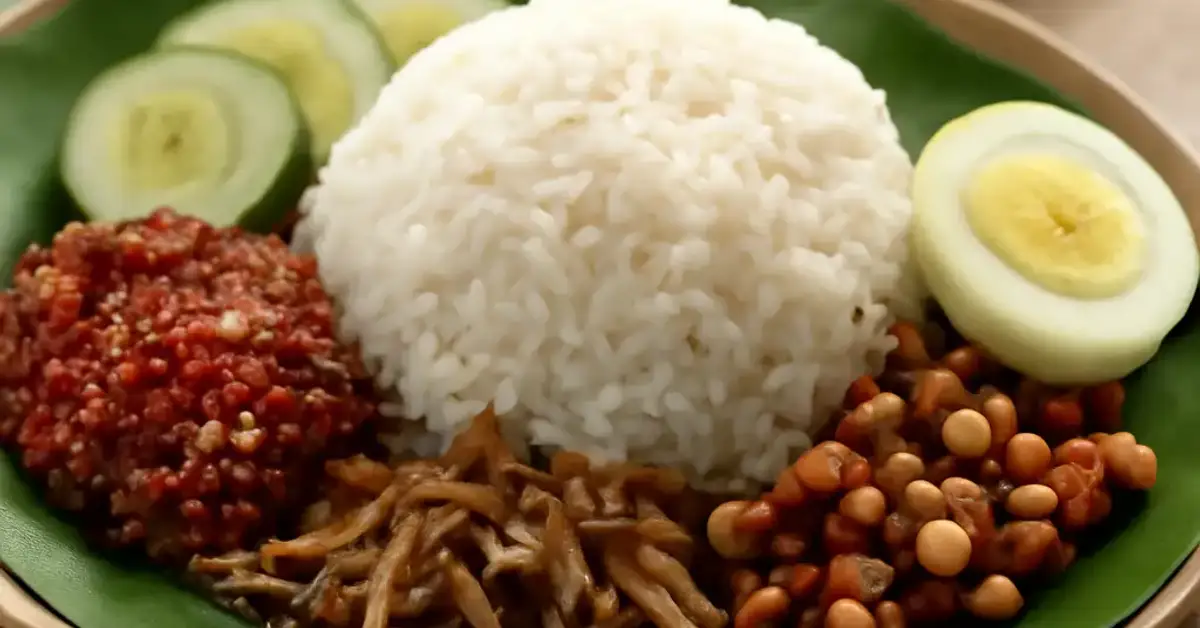
The Surprising Cultural Meaning of Nasi Lemak Begins with Rice and Coconut
To understand Nasi Lemak, you must first understand how Malaysians view rice. Rice is life. It is the first solid food a baby tastes, the centre of every wedding feast, and the silent witness to family arguments around the dinner table. When you pair rice with coconut milk (santan), you elevate it from everyday staple to something celebratory. The word lemak itself means rich or fatty — a term of endearment for food that comforts.
Anthropologists note that the cultural meaning of Nasi Lemak is rooted in the agricultural rhythms of pre-colonial Malaya. Farmers needed a portable, energy-dense breakfast that could survive hours in the field wrapped in banana leaf. Coconut milk provided calories, salt preserved the ikan bilis (anchovies), and sambal added a punch to wake up tired taste buds. Every ingredient served a purpose. Nothing was wasted. For a related guide, see 5 Best Nasi Lemak Ayam Goreng: The Fried Chicken Everyone Craves.
Why Banana Leaf Wrapping Matters
The banana leaf is not decoration. It adds a subtle grassy aroma, keeps the rice moist, and signals that the meal was prepared with care. In Malay culture, offering food in banana leaf is a gesture of respect and generosity. When you unwrap a Nasi Lemak packet, you are literally untying a tradition that goes back generations.
Seven Layers of the Cultural Meaning of Nasi Lemak
Let’s peel back the banana leaf and examine each layer — from history to modern identity — to reveal the seven surprising insights that make Nasi Lemak uniquely Malaysian.
1. It Was Born from Colonial Economic Pressure
British colonial administrators encouraged rice cultivation in Malaya to feed the growing mining and rubber workforces. Smallholder farmers adapted by planting coconuts alongside rice paddies. The surplus of coconut milk gave birth to a richer, more sustaining version of plain rice. Nasi Lemak became the lunchbox of the working class — Chinese tin miners, Indian rubber tappers, and Malay farmers all ate some version of it. Its earliest written mention appears in British colonial records from the early 1900s, describing a “native breakfast of coconut rice with fried fish and chillies.”
2. It Is a Living Map of Malaysian Food Culture
Look at a plate of Nasi Lemak and you see the whole country. The rice (Malay), the sambal (often Chinese-style with dried shrimp), the crispy anchovies (a nod to coastal Malay fishing villages), the hard-boiled egg (British influence via the colonial breakfast), and the peanuts (introduced by Portuguese traders via India). Each component tells a migration story. The cultural meaning of Nasi Lemak is that Malaysia did not blend into one culture; it learned to share a single plate.
3. The Sambal Is the Soul
Ask any Malaysian what makes or breaks a Nasi Lemak, and they will point to the sambal. A great sambal has balance — spicy, sweet, sour, savoury all at once. Home cooks guard their sambal recipes like family heirlooms. The sambal also reveals regional differences: Penang sambal tends to be sweeter with caramelised belacan, Johor sambal is fierier with bird’s eye chillies, and Kelantan versions use less sugar. This regional pride is part of the cultural meaning of Nasi Lemak: every spoonful is a declaration of where you come from.
4. It Symbolises Post-Independence Nationhood
After Merdeka in 1957, Malaysia needed a unifying national symbol. Politicians and tourism boards latched onto Nasi Lemak because it was already eaten by all ethnic groups. By the 1970s, government campaigns promoted it as “Malaysia’s breakfast.” This deliberate positioning turned a humble roadside dish into a patriotic emblem. Today, airlines serve Nasi Lemak on national carrier flights, and embassies abroad offer it at diplomatic events. The cultural meaning of Nasi Lemak now carries the weight of official national identity.
5. It Adapts to Every Meal of the Day
While traditionally a breakfast dish, Nasi Lemak has transcended time. You can eat it for lunch, dinner, or supper at 2 a.m. from a 24-hour mamak stall. Modern versions include Nasi Lemak with fried chicken (a 1990s innovation), Nasi Lemak with rendang, and even Nasi Lemak burgers. Each adaptation proves that the cultural meaning of Nasi Lemak is not frozen in history — it evolves with the people who love it.
6. It Bridges the Class Divide
You can buy Nasi Lemak for RM1.50 from a roadside pushcart or pay RM50 for a Michelin-starred version with foie gras and truffle oil. Both are recognisably Nasi Lemak. This classlessness is rare in food culture. A billionaire and a Grab driver can share the same craving for the same dish. The cultural meaning of Nasi Lemak includes a quiet message: at the table, we are equal.
7. It Is a Global Ambassador for Malaysian Food Culture
From London to Melbourne to Tokyo, Nasi Lemak has popped up on menus far beyond Southeast Asia. Malaysian expats open Nasi Lemak stalls to combat homesickness, and curious locals line up for a taste of the fragrant rice. International food writers consistently rank it among the world’s best breakfasts. This global reach has reinforced the cultural meaning of Nasi Lemak at home: if the world loves our food, then our culture must be worth celebrating.
The Nasi Lemak History and Symbolism Behind Its Rise to Fame
The Nasi Lemak history and symbolism is not a straight line from field to fame. It zigzagged through colonial policies, racial tensions, economic recessions, and the rise of street food tourism. During the 1997 Asian financial crisis, cheap street food like Nasi Lemak became a lifeline for urban Malaysians. Hawkers who sold it from makeshift carts often supported entire families through the downturn. That resilience is now baked into the dish’s identity.
In 2009, a controversial proposal to ban street food vendors in Kuala Lumpur sparked public outrage. Thousands protested by eating Nasi Lemak in public — a peaceful, delicious act of defiance. The ban was shelved. The Nasi Lemak history and symbolism teaches us that food can be a powerful political tool when people feel their heritage is under threat.
Political Symbolism on the Plate
In 2018, during the historic general election that toppled the Barisan Nasional coalition after 61 years, Nasi Lemak became a campaign symbol. Opposition leaders posed for photos eating Nasi Lemak with voters, signalling that they were ordinary people who shared the same daily rituals. The dish was no longer just food — it was a statement of solidarity. This political layer is a relatively new but potent part of the cultural meaning of Nasi Lemak.
Modern Interpretations: Fusion, Fine Dining, and Instant Packs
The most surprising evolution of Nasi Lemak might be its entry into fine dining. At restaurants like Dewan at The Kuala Lumpur Hilton, chefs deconstruct Nasi Lemak into a three-course tasting menu — coconut rice foam, sambal gel, anchovy powder. Purists scoff, but these experiments keep the dish in the conversation. Meanwhile, Maggi and Indomie have released instant Nasi Lemak noodles, making the flavour profile accessible to younger generations who might never learn to pound sambal by hand.
What does this mean for the cultural meaning of Nasi Lemak? It means the dish is alive. It is not a museum piece. It can be a $0.50 street snack or a $50 gastronomic experience and still be authentic — because authenticity lies in the spirit, not the price tag.
The Danger of Over-Commercialisation
Not every innovation is welcome. Mass-produced Nasi Lemak often uses artificial santan flavouring and low-quality chillies. Purists argue that this dilutes the cultural meaning of Nasi Lemak, turning a labor-of-love dish into a factory product. The tension between preserving tradition and embracing modernity is a central debate in Malaysian food culture today. For a related guide, see Why Village Park Restaurant Is Malaysia’s Nasi Lemak Favorite.
Common Myths About Nasi Lemak Debunked
Let’s clear up some misconceptions that obscure the cultural meaning of Nasi Lemak.
| Myth | Truth |
|---|---|
| Nasi Lemak is just a breakfast dish. | It is eaten at all hours, any day. |
| Nasi Lemak must have fried chicken. | Fried chicken only became common in the 1980s; traditional versions use ikan bilis and egg. |
| Sambal is always spicy. | Regional variations range from mild and sweet to blazing hot. |
| Nasi Lemak is originally Malay. | It is a hybrid dish with contributions from multiple ethnic groups. |
| Instant Nasi Lemak is just as good. | Convenient, but lacks the aromatic depth of freshly cooked coconut rice and handmade sambal. |
Useful Resources
To dive deeper into Nasi Lemak history and symbolism, explore these authoritative sources:
- BBC Travel: The story of Malaysia’s national dish – a thorough historical feature on Nasi Lemak’s journey from paddy field to icon.
- Tourism Malaysia: Malaysian Culinary Heritage – official cultural documentation of dishes, including Nasi Lemak, with regional variations and recipes.
Frequently Asked Questions About cultural meaning of Nasi Lemak
What does Nasi Lemak literally mean?
In Malay, “nasi” means rice and “lemak” means rich or fatty, referring to the coconut milk used in cooking the rice.
Why is Nasi Lemak considered Malaysia’s national dish?
It is unofficially recognised as the national dish because it is eaten by all ethnic groups and represents the country’s multicultural harmony.
What is the cultural meaning of Nasi Lemak in daily life?
It symbolises shared identity, comfort, and accessibility — a meal that connects Malaysians across class, ethnicity, and geography.
How did Nasi Lemak originate?
It evolved from the breakfast of Malay farmers and fishermen, who needed a filling, portable meal that could last hours in the tropical heat.
What are the essential components of authentic Nasi Lemak ?
Coconut rice, sambal (chilli paste), fried anchovies, roasted peanuts, and a hard-boiled egg are the core elements.
Is Nasi Lemak only eaten for breakfast?
No, it is consumed throughout the day — as lunch, dinner, or a late-night snack — at home, street stalls, and restaurants.
What role does sambal play in the cultural meaning of Nasi Lemak ?
Sambal is the emotional heart of the dish; each region and family has a unique recipe that reflects local identity and taste preferences.
How does Nasi Lemak reflect Malaysian food culture ?
It combines Malay, Chinese, and Indian culinary techniques, demonstrating how different communities have influenced a single dish over centuries.
Are there regional variations of Nasi Lemak ?
Yes, Penang sambal is sweeter, Johor sambal is spicier, and Kelantan uses a slightly different coconut rice preparation with more herbs.
Why is Nasi Lemak wrapped in banana leaf?
The banana leaf imparts a subtle fragrance, keeps the rice moist, and is a traditional, biodegradable way to serve food with respect.
What is the Nasi Lemak history and symbolism related to colonialism?
British colonial policies encouraged rice and coconut farming, which provided the raw materials for Nasi Lemak to become a common worker’s meal.
How did Nasi Lemak become a political symbol?
During the 2018 election, politicians shared Nasi Lemak with voters to signal solidarity, and in 2009, street protests over a hawker ban included public Nasi Lemak meals.
Can Nasi Lemak be vegan?
Yes, by replacing ikan bilis with tempeh or mushrooms and using plant-based protein in the sambal, it can be made fully plant-based.
What is the difference between Nasi Lemak and Nasi Kerabu?
Nasi Kerabu is a blue-coloured rice dish from the east coast, served with herbs and solok lada, while Nasi Lemak uses coconut milk and sambal.
Why are peanuts essential to Nasi Lemak ?
Peanuts add crunch and protein; they were introduced to the region by Portuguese traders and later integrated into Malaysian food culture.
Is Nasi Lemak high in calories?
A typical serving contains around 400–600 calories depending on portion size and added proteins like fried chicken or rendang.
What is the best way to experience the cultural meaning of Nasi Lemak as a tourist?
Visit a traditional Malay stall in Kampung Baru or a Chinese kopitiam in Ipoh — both serve authentic versions with distinct local touches.
How has the cultural meaning of Nasi Lemak changed in the last decade?
It has expanded from local comfort food to a global culinary ambassador, featured in international food festivals and fine-dining menus.
What is the most controversial modern Nasi Lemak variation?
Nasi Lemak burgers and Nasi Lemak pizza often spark heated debates among traditionalists who feel the dish should not be sweetened or westernised.
Will Nasi Lemak lose its cultural meaning if it becomes too commercialised?
Authenticity lives in home kitchens and small stalls; mass-market versions may dilute flavour, but the deeper meaning persists as long as families cook and share it.