

traditional food in malaysia Key Takeaways
Malaysia’s food culture is a vibrant fusion of Malay, Chinese, and Indian influences, making it one of Asia’s most exciting culinary destinations.
- Traditional food in malaysia reflects the country’s multicultural heritage, with ingredients like coconut milk, lemongrass, and spices appearing in many dishes.
- Seven must-try dishes include nasi lemak, rendang, satay, laksa, char kway teow, roti canai, and cendol.
- Food is central to Malaysian social life, from street stalls to family gatherings, and these dishes are celebrated nationwide.
Why Traditional Food in Malaysia Stands Out
Malaysia sits at the crossroads of major trade routes, and its traditional malaysian dishes tell that story beautifully. Malay, Chinese, and Indian communities have each contributed layers of flavor, technique, and tradition. The result is a cuisine that feels both exotic and comforting, spicy and savory, all at once. For a related guide, see 7 Essential Malaysian Traditional Foods You Must Try Once.
Street food hawkers, night markets, and kedai kopi (coffee shops) are where most locals eat daily. No fancy setting required—just bold flavors and fresh ingredients. If you want to experience the heart of malaysian food, you start right on the sidewalk.
7 Must-Try Food in Malaysia Dishes
Each of these dishes represents a different region or community. Together, they give you a complete picture of traditional food in malaysia.
1. Nasi Lemak – The National Breakfast
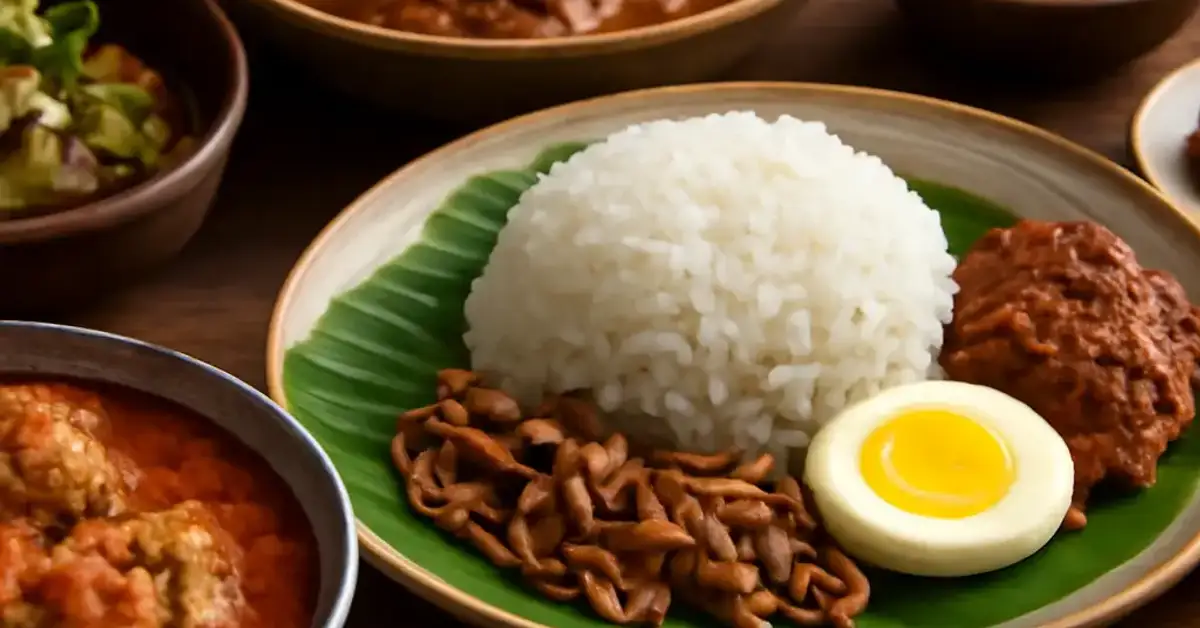
Nasi lemak is the ultimate must-try food in malaysia. Fragrant coconut rice steamed with pandan leaves is served with spicy sambal, crispy anchovies, fried peanuts, hard-boiled egg, and cucumber slices. Some versions add fried chicken or beef rendang. It’s sold everywhere—from morning street stalls to upscale restaurants. For a related guide, see Malaysian Food Guide: 7 Essential Dishes to Try in 2024.
2. Rendang – Slow-Cooked Spiced Meat
Rendang is a dry curry made by simmering beef (or chicken) in coconut milk and a paste of lemongrass, galangal, turmeric, ginger, and chilies. The cooking process takes hours until the liquid evaporates and the meat becomes tender and deeply caramelized. This is one of those traditional malaysian dishes that gets better the next day.
3. Satay – Grilled Skewers with Peanut Sauce
Satay consists of marinated chicken or beef skewers grilled over charcoals, served with a rich peanut dipping sauce, ketupat (compressed rice cakes), and fresh cucumber and onion. The smoky char from the grill combined with the creamy, slightly spicy peanut sauce makes it a favorite at night markets across Malaysia.
4. Laksa – Tangy Coconut Noodle Soup
Laksa comes in two main varieties: Assam laksa (sour fish-based broth) and curry laksa (rich coconut curry broth). Both are packed with vermicelli noodles, shredded chicken, prawns, tofu puffs, and hard-boiled eggs, topped with fresh herbs and a dollop of sambal. The balance of sour, spicy, and creamy flavors is unforgettable.
5. Char Kway Teow – Wok-Fried Flat Noodles
This Chinese-influenced street food stir-fries flat rice noodles with dark soy sauce, prawns, cockles, Chinese sausage, bean sprouts, and chives in a blazing hot wok. The key is the “wok hei” (breath of the wok), a smoky aroma that only high heat can achieve. It’s one of the most popular malaysian food choices for a quick, satisfying meal.
6. Roti Canai – Flaky Indian Flatbread
Roti canai is a crisp, flaky flatbread stretched thin, folded, and pan-fried until golden. It’s typically served with a small bowl of dhal (lentil curry) or sugar. Locals eat it for breakfast, as a snack, or even a light dinner. You’ll find roti canai at almost any Indian-Muslim mamak stall.
7. Cendol – Icy Coconut Dessert
Finish your meal with a bowl of cendol. Shaved ice is topped with green rice-flour jelly, sweet red beans, creamed coconut milk, and a generous drizzle of palm sugar syrup. It’s the perfect refreshment on a hot day and a beloved sweet treat in Malaysia.
How to Choose Which Traditional Food in Malaysia to Try First
With so many traditional malaysian dishes, it helps to have a strategy. Here are a few tips:
- Start with breakfast. Nasi lemak is widely available and gives you a gentle introduction to local spices and sambal.
- Try satay at a night market. The atmosphere and the grill aroma add to the experience.
- Order rendang in a restaurant. Authentic rendang takes hours to prepare; a good restaurant or home cook will do it justice.
- Go for laksa if you want heat. It’s bold and spicy, so ask for less chili if you’re sensitive.
Common Mistakes to Avoid When Eating Malaysian Food
Even adventurous eaters sometimes make missteps. Here’s what to watch out for:
- Using a fork for everything. Many dishes (like nasi lemak and roti canai) are eaten with the right hand. Locals often mix the rice and sambal with their fingers—it enhances the flavor.
- Skipping the sambal. Sambal is the soul of malaysian food. Even if you don’t like spicy food, try a tiny bit. It adds incredible depth.
- Ordering rendang from a fast-food shop. Premade rendang lacks the complexity of slow-cooked rendang. Seek out a trusted Malay restaurant or home cook.
- Not trying street food. The best traditional malaysian dishes often come from humble hawker stalls. Hygiene standards are generally good, and the flavor is unbeatable.
Conclusion: Why Traditional Food in Malaysia Matters
Food in Malaysia is never just fuel. It’s a way to connect with the country’s history, its multicultural communities, and the joy of sharing a meal. Each dish tells a story—of trade routes, family recipes passed down for generations, and the daily hustle of market life.
Whether you’re eating nasi lemak from a banana leaf wrapper or sitting down to a full rendang dinner, traditional food in malaysia offers a genuine taste of the country’s soul. So go ahead—order the satay, ask for extra sambal, and enjoy every bite.
Useful Resources
For more on the history and regional variations of Malaysian cuisine, check out these sources:
- Tourism Malaysia – Culinary Guide – Official site covering regional specialties and food festivals.
- BBC Good Food – What Is Malaysian Cuisine? – A beginner-friendly overview of key ingredients and cooking methods.
Frequently Asked Questions About traditional food in malaysia
What is the most popular traditional food in Malaysia?
Nasi lemak is widely considered the national dish and the most popular, enjoyed by Malaysians of all backgrounds for breakfast or any meal.
Is Malaysian food very spicy?
Many Malaysian dishes use chilies and sambal, so they can be spicy. However, street stalls and restaurants often offer milder versions upon request.
What are the main influences on Malaysian cuisine?
Malay, Chinese, Indian, and indigenous Bornean cultures have all shaped Malaysian food, with additional influences from Thailand, Indonesia, and Portugal.
Can I eat Malaysian food if I’m vegetarian?
Yes, dishes like roti canai (without egg), vegetable curry, and cendol are vegetarian. Many Indian-Muslim stalls also offer vegetarian options.
Where can I try these dishes in Malaysia?
You can find them at hawker centers, night markets (pasar malam), food courts, and traditional coffee shops in every city and town across Malaysia.
Is street food safe to eat in Malaysia?
Yes, street food in Malaysia is generally safe. Look for stalls with high turnover, clean preparation areas, and long queues of local customers.
What is the difference between nasi lemak and nasi goreng?
Nasi lemak is coconut rice served with sambal and sides; nasi goreng is fried rice, often with shrimp paste, egg, and vegetables.
What drink goes best with Malaysian food ?
Iced lemon tea (teh o ais), barley water, or a cold coconut juice are popular choices to balance the spices.
Does Malaysia have halal food?
Yes, the majority of Malaysian food is halal. Malay and Indian-Muslim stalls are certified halal, while Chinese stalls may not be.
What is a typical Malaysian breakfast?
A typical breakfast includes nasi lemak, roti canai with curry, or kaya toast with soft-boiled eggs and coffee.
What is durian and why is it famous in Malaysia?
Durian is a spiky fruit with a strong smell and creamy, custard-like flesh. It’s called the “king of fruits” and is widely enjoyed fresh or in desserts like cendol.
Are there differences between Malaysian and Indonesian rendang?
Yes, Malaysian rendang is often slightly drier and uses a different spice blend, while Indonesian rendang can be more coconut-forward and saucy.
What is the best time to visit night markets for food?
Night markets usually start around 5 PM and are busiest between 7 PM and 9 PM. Arrive early for the freshest food.
Can I find Malaysian food outside Malaysia?
Yes, major cities like Singapore, London, Sydney, and New York have Malaysian restaurants. The flavors are best experienced in Malaysia itself.
What is the most popular dessert in Malaysia?
Cendol is the most iconic dessert, but other favorites include ice kacang (shaved ice with syrup and toppings) and kuih (bite-sized cakes).
Is Malaysian food expensive?
Street food is very affordable—a meal costs around RM5–RM15 (about $1–$3.50). Restaurant meals are slightly more but still reasonable.
What is the most common cooking method in Malaysia?
Stir-frying in a wok (especially for noodle dishes) and slow simmering in coconut milk for curries and rendang are the most common methods.
Do Malaysians eat with chopsticks or spoons?
Chinese-Malaysians often use chopsticks for noodle dishes, while Malay and Indian-Malaysians typically use a spoon and fork or eat with their right hand.
What is the best souvenir food to bring from Malaysia?
Popular souvenirs include durian chips, curry paste, sambal, white coffee, and traditional kuih.
What is the most famous food festival in Malaysia?
The Malaysia International Gourmet Festival (MIGF) and the Penang International Food Festival are the biggest, showcasing local and international chefs.