


Malaysian comfort food Key Takeaways
Beyond the hawker stalls and fragrant spice blends, Malaysian comfort food is a deeply personal journey into the heart of the country’s diverse culture.
- Malaysian comfort food is defined by rich, bold flavors and communal eating, with dishes like nasi lemak and laksa carrying deep cultural significance.
- Each dish features unique spice combinations, cooking techniques, and regional variations that make every bowl or plate a new experience.
- From the perfect coconut rice to the sourest fish curry, these seven checks help you choose the best version of each comfort classic.
Why Malaysian comfort food Holds a Special Place in Our Hearts
I remember the first time I visited my grandmother’s kampung kitchen. The smell of sambal frying in a hot kuali—that sharp, sweet, and spicy aroma—wrapped itself around me like a warm towel. That scent, my grandfather’s recipe book, and the laughter of cousins arguing over the last piece of crispy fried chicken are the threads that weave together what I call true Malaysian comfort food.
It is not just about feeding a growling stomach. It is about feeding the soul. In a country where Malay, Chinese, Indian, and indigenous traditions blend beautifully, every dish tells a story. Whether it is a bowl of steaming laksa on a rainy afternoon or a plate of nasi lemak wrapped in banana leaf before a long journey, these dishes are trusted companions through every mood and season. For a related guide, see 7 Best Halal Malaysian Food You Must Try in 2025.
An Overview of Iconic Malaysian comfort food Dishes
Before you dive into the selection process, it helps to understand the stars of the show. Each dish has a unique personality, a specific spice profile, and a set of unwritten rules about how it should be enjoyed.
Nasi Lemak: The National Treasure
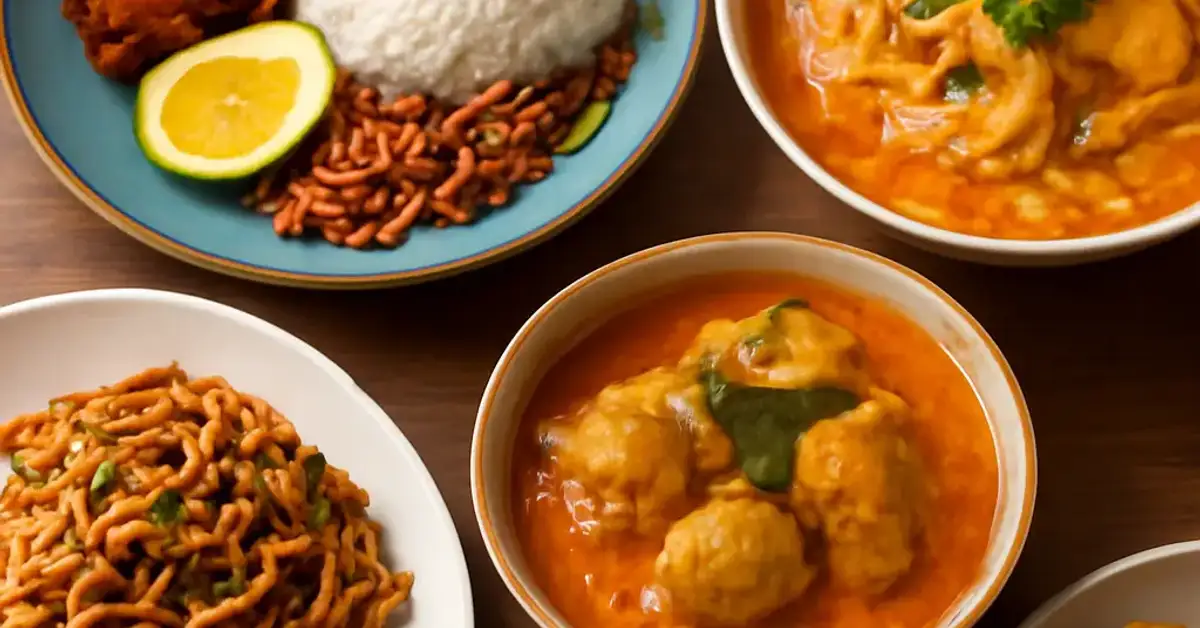
Imagine fluffy rice cooked in rich coconut milk and a touch of pandan, served with a fiery sambal, crispy fried anchovies, toasted peanuts, a hard-boiled egg, and a slice of cucumber. That is nasi lemak—the ultimate Malaysian comfort food.
It is sold everywhere, from the simplest roadside stall to high-end restaurants. The magic lies in the balance: the creamy rice, the crunch of the anchovies, and the punchy heat of the sambal. I always judge a nasi lemak by its sambal. A good one is slow-cooked until the onions caramelize and the chili paste darkens to a deep, rich red. If the sambal is too watery or too sweet, the whole dish falls apart.
Laksa: A Bowl of Sour, Spicy Comfort
Ask any Malaysian what they crave when they are feeling under the weather, and many will say laksa. This tangy, spicy noodle soup comes in two main families: laksa lemak (with a creamy coconut base) and assam laksa (tamarind-based, sour and sharp).
The Penang assam laksa, with its flaked mackerel, thick rice noodles, and a broth so sour it makes your cheeks ache, is a particular love of mine. It is the perfect Malaysian comfort food for a hot, humid day. The key is the freshness of the herbs—torch ginger, lemongrass, and daun kesum (Vietnamese mint) must be added just before serving to release their full fragrance.
Roti Canai: The Flaky Flatbread
This Indian-influenced flatbread is a breakfast staple and an anytime snack. The thin dough is stretched, folded, and slapped onto a hot griddle until it turns golden and flaky. Eaten with a side of dal curry or a sprinkle of sugar, roti canai is pure Malaysian comfort food.
I remember late-night drives to a mamak stall where the roti guy would toss the dough in the air like a circus performer. The perfect roti should be crispy on the outside, soft and layered on the inside. It should not be oily or doughy.
7 Trusted Checks for Choosing the Best Malaysian comfort food
Not all versions of these dishes are created equal. Use these seven checks to find the most authentic and satisfying version every time.
Check 1: The Freshness of Ingredients
Freshness makes or breaks a dish. For nasi lemak, the coconut milk must be fresh, not canned or powdered. For laksa, the fish must be flaky and sweet, not frozen or dry. For roti canai, the dough should be made fresh that morning. Always choose stalls where you can see the ingredients being prepared.
Check 2: The Balance of Flavors
Malaysian comfort food is all about balance. A good sambal should be spicy, slightly sweet, and savory. A laksa broth should be sour, salty, and aromatic. Taste the broth or sambal first. If one flavor overpowers the others, move on.
Check 3: The Texture of the Noodles or Rice
Rice for nasi lemak must not be mushy. Noodles in laksa should be springy, not clumpy. Roti canai must be crispy and flaky. Ask if you can see the dish before ordering, or look for reviews that mention texture.
Check 4: The Quality of the Protein
Whether it is fried chicken, beef rendang, or fried fish, the protein should be cooked fresh, not reheated. The chicken should be juicy, the rendang should have a dry, dark gravy full of coconut and spices, and the fish should not smell fishy.
Check 5: The Aroma of the Spices
When the dish arrives, take a moment to inhale. The scent of freshly ground spices—turmeric, coriander, cumin, and galangal—should hit you immediately. If it smells flat or like old oil, the dish will likely disappoint.
Check 6: The Authenticity of the Cooking Method
Traditional methods matter. Nasi lemak rice should be cooked in a pot, not a rice cooker (though many modern stalls use one). Laksa broth should be simmered for hours to meld the flavors. Roti canai should be stretched and slapped by hand, not rolled with a pin.
Check 7: The Vibe of the Place
Trust your gut. If the stall is crowded with locals, especially older folks, that is a good sign. The best Malaysian comfort food is often found in places that look a little rough around the edges, where the owner has been cooking the same recipe for decades.
Troubleshooting: When Your Comfort Food Falls Short
Even with these checks, you may occasionally land on a disappointing plate. Here is how to salvage the experience:
- If the sambal is too salty: Add a squeeze of calamansi lime to brighten the flavor. It cuts the saltiness and adds a fresh note.
- If the laksa broth is too sour: Ask for a side of sambal belacan (shrimp paste chili) and mix it in. The added salt and heat will balance the acidity.
- If the roti canai is too oily: Pat it with a napkin to remove excess oil, then fold and dip immediately. The curry helps mask the grease.
- If the rice in nasi lemak is too dry: Ask for extra sambal or a side of curry. The moisture will help.
Tips for Enjoying Malaysian comfort food Like a Local
These small rituals elevate the experience:
- Eat nasi lemak with your hands if you are comfortable—pinch a small portion of rice and let the flavors meld together on your palm.
- Always slurp your laksa. It aerates the broth and releases the spice aromas. It is considered a compliment to the chef.
- Dip your roti canai with enthusiasm, but not drench it. The crispy outer layer should remain intact until the last bite.
- Pair any dish with a cold, sweet tea (teh tarik) or a glass of chilled sugarcane juice to cut the heat.
Useful Resources
For more information on the history and regional variations of these dishes, visit MalaysianFood.net, a comprehensive guide to traditional recipes and cooking techniques. You can also explore MyLaksa.org for a deep dive into laksa varieties and the best stalls across Malaysia.
Frequently Asked Questions About Malaysian comfort food
What is the most popular Malaysian comfort food ?
Nasi Lemak is often considered the most popular Malaysian comfort food. It is widely eaten for breakfast, lunch, or dinner and represents the country’s multicultural heritage.
Is laksa always spicy?
Not necessarily. While some versions like assam laksa are tangy and mildly spicy, others like laksa lemak can be prepared with minimal chili. You can always ask for less sambal.
Can I find vegetarian Malaysian comfort food ?
Yes. Many dishes like nasi lemak (without the anchovies) can be made vegetarian. Roti canai with dal is also a great option. Look for stalls that offer vegetable-based curries.
What makes Malaysian comfort food different from other Southeast Asian cuisines?
It is the bold combination of Malay, Chinese, and Indian influences. You will find coconut milk, tamarind, lemongrass, shrimp paste, and peanuts used together in ways unique to Malaysia.
How do I choose a good hawker stall?
Look for stalls with a long queue of locals, especially older customers. Check the cleanliness of the cooking area and the freshness of ingredients on display. Trust your nose—it should smell fragrant, not greasy.
What is the best time to eat roti canai?
Any time of day, but it is especially good for breakfast or as a late-night snack. Mamak stalls serve it until the early hours of the morning.
Are there any non-spicy Malaysian comfort food dishes?
Yes. Dishes like kuih (traditional sweets), nasi goreng (fried rice) with less chili, and curry puff without chili are available. Ask for ‘kurang pedas’ (less spicy).
What drink pairs well with spicy Malaysian food?
Teh tarik (pulled milk tea) is the classic choice. Its creaminess balances the heat. Cold bandung (rose syrup with milk) or sugarcane juice are also popular.
Is chicken rice considered Malaysian comfort food ?
Absolutely. Hainanese chicken rice is a beloved dish in Malaysia. It is simple, aromatic, and incredibly comforting, especially with the ginger and chili sauces.
What is the difference between curry laksa and assam laksa?
Curry laksa uses a coconut milk base and is rich, creamy, and mild. Assam laksa uses a tamarind-based broth that is sour, fishy, and more pungent.
Can I make Malaysian comfort food at home?
Yes, with the right ingredients like coconut milk, belacan (shrimp paste), and lemongrass. Many recipes are available online, and most spices are easy to find in Asian grocery stores. For a related guide, see 7 Essential Malaysian Food Recipes for an Easy Homemade Feast.
What is the role of sambal in Malaysian comfort food ?
Sambal is a key condiment. It can be a dipping sauce, a cooking base, or a topping. It adds heat, sweetness, and depth to many dishes like nasi lemak and fried rice.
Are there regional variations in Malaysian comfort food ?
Yes. Penang is famous for its assam laksa, while Kuala Lumpur is known for its nasi lemak with fried chicken. Kelantan and Terengganu have their own versions of laksa and nasi kerabu.
Is Malaysian comfort food healthy?
It depends on the dish and portion. Many are rich in coconut milk, oil, and sugar. However, they are also packed with herbs, spices, and vegetables. Enjoy in moderation.
What is the best way to eat nasi lemak?
If you are at a traditional stall, ask for it wrapped in banana leaf. Eat with your right hand (if comfortable) by mixing the sambal, anchovies, and rice together.
Can I find halal Malaysian comfort food easily?
Most traditional hawker stalls and nasi kandar restaurants serve halal food. Look for a halal certificate sticker or ask the staff. Mamak stalls are generally halal.
What is the best Malaysian comfort food for rainy days?
A hot bowl of laksa or mee rebus (noodles in a rich potato and curry broth) is perfect. The warmth and spices help chase away the chill.
Why is Malaysian comfort food so affordable?
Because it is street food culture. Hawker stalls have low overheads, and ingredients are locally sourced. You can enjoy a full meal for under RM10 at most places.
What is the most underrated Malaysian comfort food dish?
Mee goreng mamak—a stir-fried noodle dish with a thick, sweet, and spicy sauce. It is often overlooked but incredibly satisfying, especially with a side of fried egg.
How can I find authentic Malaysian comfort food overseas?
Search for Malaysian-owned restaurants in cities with large Southeast Asian communities. Check reviews for terms like ‘authentic,’ ‘family recipe,’ and ‘sambal.’ Ask locals who have visited Malaysia.