

Halal Malaysian food Key Takeaways
Halal Malaysian food offers an incredible blend of Malay, Chinese, Indian, and indigenous influences, all prepared according to Islamic dietary laws.
- Halal Malaysian food is abundant and easy to find, with most Malay and Indian Muslim eateries serving certified options.
- The best halal Malaysian dishes include Nasi Lemak, Satay, Rendang, Char Kway Teow (halal versions), Roti Canai, Laksa, and Nasi Kerabu.
- Traditional halal Malaysian cuisine relies on fresh spices like turmeric, lemongrass, galangal, and coconut milk for its signature depth of flavor.
Why Halal Malaysian Food Is a Global Culinary Treasure
Malaysia sits at the crossroads of ancient trade routes, and its food reflects centuries of cultural exchange. What makes halal Malaysian food unique is how it weaves together Malay, Chinese, Indian, and Nyonya traditions—all while adhering to halal standards. The country’s street stalls, known as hawker centers, and family-run restaurants offer dishes that are both deeply traditional and constantly evolving. In 2025, foodies are flocking to Kuala Lumpur, Penang, and Johor Bahru to sample these flavors, and the recognition of Malaysian cuisine on the world stage continues to grow. For a related guide, see 7 Essential Flavors Why Malaysian Cuisine Reflects Multicultural Heritage.
Key Ingredients That Define Traditional Halal Malaysian Cuisine
Most traditional halal Malaysian cuisine relies on a pantry of aromatic ingredients. Coconut milk (santan) adds creaminess to curries and rice dishes. Lemongrass, galangal, turmeric, and kaffir lime leaves provide the citrusy, earthy notes that separate Malaysian food from its neighbors. Dried shrimp, belacan (fermented shrimp paste), and tamarind contribute umami and tang. Chilies—both fresh and dried—deliver heat, while palm sugar (gula melaka) brings a caramel sweetness to desserts and sauces.
Understanding these core components helps you appreciate why each dish tastes so distinct. When you order a bowl of Laksa or a plate of Nasi Lemak, you’re tasting a careful balance of these ingredients—something that mass-produced versions rarely capture.
7 Best Halal Malaysian Dishes You Need to Try in 2025
Below are the seven dishes that define best halal Malaysian dishes for any visitor. Each one is widely available, deeply rooted in Malaysian culture, and guaranteed to leave an impression.
1. Nasi Lemak – The National Breakfast
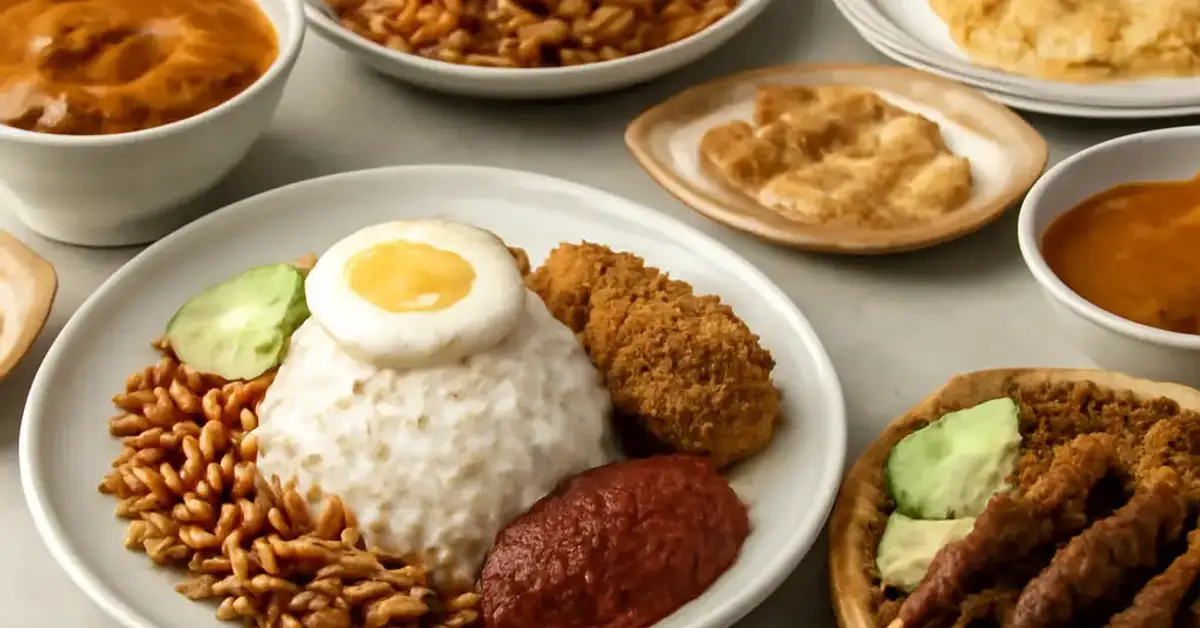
Nasi Lemak is the undisputed king of halal Malaysian food. Fragrant coconut rice is served with spicy sambal, crispy anchovies, toasted peanuts, a hard-boiled egg, and a slice of cucumber. For a heartier version, add fried chicken or beef rendang. You’ll find it everywhere from roadside stalls to upscale cafes. The key is the sambal—each vendor’s recipe is a closely guarded secret.
2. Satay – Grilled Meat Skewers With Peanut Sauce
Satay consists of marinated chicken, beef, or lamb skewers grilled over charcoal until smoky and tender. The accompanying peanut sauce is rich, slightly sweet, and spiced with lemongrass and turmeric. Ketupat (compressed rice cakes) and fresh cucumber and onion slices complete the plate. Look for satay stalls in night markets or dedicated satay restaurants in Kajang, just outside Kuala Lumpur.
3. Rendang – Slow-Cooked Dry Curry
Rendang is a slow-cooked beef or chicken dish simmered in coconut milk and a paste of chilies, lemongrass, galangal, garlic, and turmeric until the liquid evaporates and the meat becomes intensely flavorful. Although it originated from the Minangkabau culture in Indonesia, Malaysian rendang has its own distinct profile—slightly drier and more caramelized. It’s a staple during festive occasions like Hari Raya and easily one of the best halal Malaysian dishes for anyone who loves bold, complex flavors.
4. Char Kway Teow – Stir-Fried Flat Noodles (Halal Version)
This popular noodle dish typically includes cockles, Chinese sausage, and egg, but the halal version substitutes chicken or beef and omits non-halal ingredients. The flat rice noodles are stir-fried over high heat with soy sauce, chili paste, bean sprouts, and chives. The result is a smoky, savory plate that captures the energy of Malaysian street food. Look for stalls that display a halal certificate or are run by Muslim Chinese or Indian Muslim vendors.
5. Roti Canai – Flaky Flatbread With Curry
Roti Canai is a crisp, layered flatbread that’s griddled until golden, then served with a bowl of lentil curry or sambal. It’s a beloved breakfast and snack item, often eaten by hand. The dough is stretched thin, folded, and fried to create its signature texture. For a filling meal, order “roti telur” (with egg) or “roti bawang” (with onion). Mamak stalls (Indian Muslim eateries) are the best places to find authentic Roti Canai.
6. Laksa – Spicy Noodle Soup
Laksa comes in two main regional styles: Asam Laksa (from Penang) and Curry Laksa. Asam Laksa features a sour fish-based broth with tamarind, lemongrass, and flaked mackerel, topped with cucumber, pineapple, and mint. Curry Laksa is creamier, with a coconut milk broth enriched with curry spices, tofu puffs, and chicken or shrimp. Both versions are widely available and are essential to any traditional halal Malaysian cuisine tour.
7. Nasi Kerabu – Blue Rice Salad
Nasi Kerabu originates from the east coast of Peninsular Malaysia, particularly Kelantan and Terengganu. The rice is naturally dyed blue with butterfly pea flowers and served with a medley of fresh herbs, bean sprouts, salted eggs, keropok (fish crackers), and either fried chicken or ikan bakar (grilled fish). A dollop of budu (fermented fish sauce) or sambal adds a punch of umami. It’s a visually striking and deeply satisfying dish that deserves more international attention.
Dining Etiquette and Tips for Enjoying Halal Street Food Malaysia
Eating halal street food Malaysia is an adventure, but a few tips will make your experience smoother and more authentic.
Dining Etiquette in Malaysia
Malaysians are generally relaxed, but a few courtesies go a long way. Use your right hand to eat when handling food directly (the left hand is considered unclean). If you’re eating with utensils, a fork and spoon are standard—the fork pushes food onto the spoon. In more traditional eateries, you may find a “open air” seating arrangement. It’s common to share tables, especially during peak hours.
How to Identify Halal Eateries
Official halal certification is issued by the Malaysian Islamic Development Department (JAKIM). Look for a green sticker or plaque with the halal logo. Mamak stalls (Indian Muslim) and most Malay restaurants are automatically halal. Chinese and Indian restaurants may also serve halal food—just ask the owner or check for certification. Mobile apps like “Halal Grab” or local directories can help you locate verified options.
Regions Famous for Halal Malaysian Food
Each region in Malaysia offers a slightly different take on halal Malaysian food. Penang is the street food capital, famous for Asam Laksa and Char Kway Teow. Kuala Lumpur boasts a diverse mix of Malay, Indian Muslim, and Chinese halal options. Johor Bahru is known for Mee Rebus and Laksa Johor. Kelantan and Terengganu in the east coast serve unique dishes like Nasi Kerabu and Keropok Lekor. Don’t skip smaller towns—some of the best halal Malaysian dishes come from humble roadside stalls. For a related guide, see Malaysian Cuisine Cafe Menus in KL: 5 Must-Try Dishes.
Tips for Travelers Seeking the Best Halal Malaysian Food
If you’re planning a food trip to Malaysia in 2025, here are five practical tips to maximize your culinary experience:
- Trust the queues: A long line of locals is the best sign of a quality stall. Don’t be afraid to wait.
- Visit morning and evening: Breakfast markets (pasar pagi) offer fresh Nasi Lemak and Roti Canai. Night markets (pasar malam) serve a wider variety of street food.
- Learn local names: Knowing how to pronounce “Nasi Lemak” or “Satay” helps when ordering. Most vendors are friendly and will guide you.
- Carry cash: Many street vendors don’t accept credit cards. Small denominations are useful.
- Spice levels matter: If you’re sensitive to heat, ask for “kurang pedas” (less spicy). Most sambals can be adjusted.
Useful Resources
For more information on halal certification in Malaysia, visit the official JAKIM Halal Portal: JAKIM Halal Malaysia.
To find user-reviewed halal restaurants and street food spots across the country, explore the blog at HalalZilla, which covers Malaysia extensively.
Frequently Asked Questions About Halal Malaysian food
What is halal Malaysian food ?
Halal Malaysian food refers to dishes prepared according to Islamic dietary laws, avoiding pork, alcohol, and non-halal meat. It encompasses Malay, Indian Muslim, Chinese Muslim, and Nyonya cuisines found throughout Malaysia.
Is all street food in Malaysia halal?
Not all. Malay and Indian Muslim stalls are generally halal. Chinese stalls may serve pork or use lard. Look for JAKIM halal certification or ask the vendor directly.
What are the best halal Malaysian dishes for first-timers?
Nasi Lemak, Roti Canai, Satay, and Chicken Rendang are the most accessible and widely loved dishes for newcomers.
Where can I find the best halal street food Malaysia ?
Penang (George Town), Kuala Lumpur (Jalan Alor, Kampung Baru), Johor Bahru, and the east coast cities like Kota Bharu offer some of the best street food.
Is traditional halal Malaysian cuisine spicy?
Many dishes use chilies and sambal, but spice levels vary. You can often request a milder version by saying “kurang pedas.”
Do I need to look for halal certification in Malaysia?
For assurance, look for the JAKIM halal logo. In Malay and Indian Muslim eateries, it’s safe to assume the food is halal, but certification adds extra confidence.
Can vegetarians eat halal Malaysian food ?
Yes. Dishes like Roti Canai, vegetable curries, and Nasi Lemak (without meat) are common. Indian Muslim eateries often offer vegetarian options.
What is the national dish of Malaysia?
Nasi Lemak is widely considered Malaysia’s national dish, served for breakfast, lunch, or dinner across the country.
What is the difference between Malaysian and Indonesian rendang?
Malaysian rendang tends to be slightly drier and more caramelized, while Indonesian rendang from West Sumatra is often wetter and richer in coconut milk.
Is Laksa halal?
Many Laksa stalls in Malay and Indian Muslim areas are halal. However, some Penang Asam Laksa stalls may use non-halal broth—always check with the vendor.
What does “halal” mean in cooking?
“Halal” means permissible in Islam. For food, it includes proper animal slaughter, avoidance of pork and alcohol, and hygienic preparation.
Are Chinese halal restaurants common in Malaysia?
Yes, especially in Kuala Lumpur and Penang. Look for “Halal Chinese” or “Muslim Chinese” signage. They serve dishes like Char Kway Teow without pork.
What is the best time to visit Malaysian night markets?
Night markets (pasar malam) typically start around 5 PM and run until 9 or 10 PM. Arrive early for the freshest food.
Can I find halal Malaysian food in Penang?
Absolutely. Penang is famous for its halal street food, especially Asam Laksa, Nasi Kandar, and Satay.
What is Nasi Kandar?
Nasi Kandar is a steamed rice dish served with a variety of curries and side dishes, originating from Indian Muslim cuisine. It’s a must-try in Penang.
Is Roti Canai always halal?
Roti Canai from Mamak stalls (Indian Muslim) is halal. If you buy from a non-halal establishment, confirm the ingredients.
What dessert should I try with halal Malaysian food ?
Cendol (shaved ice with green rice flour jelly, coconut milk, and palm sugar) and Kuih (traditional bite-sized cakes) are excellent choices.
Do I need to tip in Malaysian restaurants?
Tipping is not expected in Malaysia. Some restaurants include a service charge. If not, leaving small change is appreciated but optional.
What is the spiciest halal Malaysian dish?
Mee Goreng Mamak and Sambal Udang (prawns in sambal) can be very spicy. Ask for mild versions if you’re sensitive.
Is Malaysian halal food safe for gluten-free diets?
Some dishes are naturally gluten-free (e.g., Nasi Lemak, Rendang, Satay). However, soy sauce (used in Chinese halal dishes) often contains wheat. Confirm with the vendor.