


Roti Canai Guide Key Takeaways
This Roti Canai Guide covers the seven most popular roti canai types , from the classic plain version to the sugar-dusted tissue variety, plus where to find the best roti canai places across Malaysia and Singapore.
- The Roti Canai Guide breaks down seven distinct roti canai types , including roti telur, roti bawang, and roti tissue.
- We highlight the best roti canai places in KL, Penang, Johor Bahru, and Singapore, with tips on what to order at each spot.
- Each type has a unique texture and flavour profile — from crispy and paper-thin to soft and eggy — so you can pick your perfect roti.
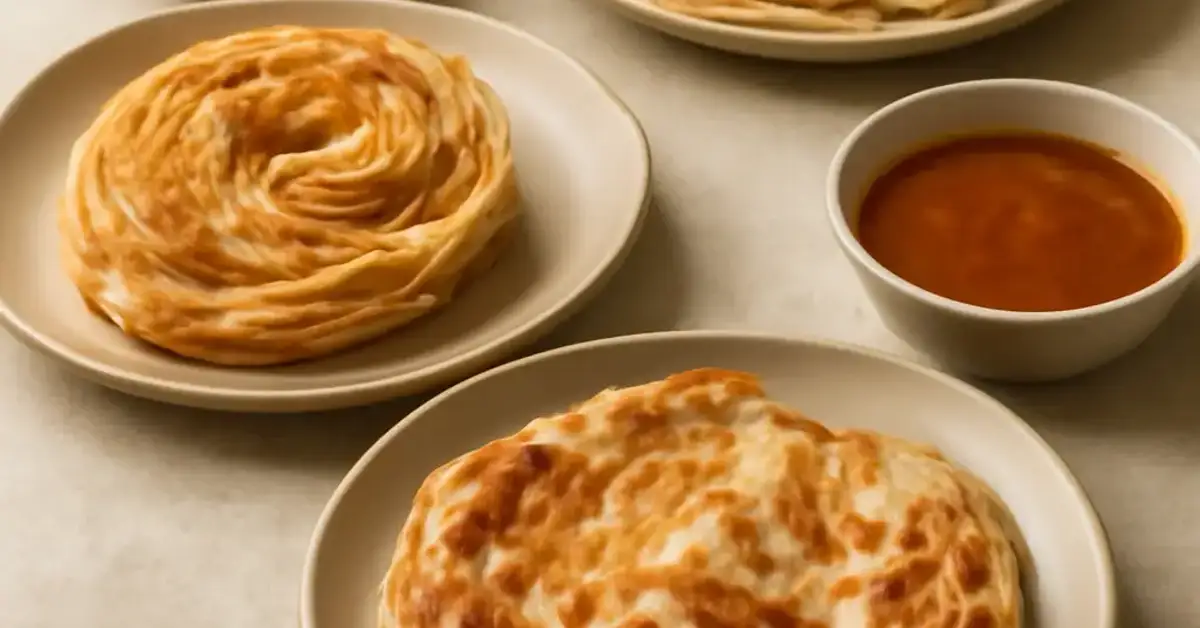
What You Need to Know About Roti Canai Types
Roti canai is more than just a flatbread — it is a Malaysian-Indian heritage dish that has evolved into a whole family of creations. The dough is repeatedly folded and slapped thin, then cooked on a hot griddle with ghee or oil. Depending on what you add or how you shape it, you get a completely different eating experience. Most roti canai is served with a side of dhal curry, sambal, or sugar. Understanding these roti canai types helps you navigate any mamak menu with confidence.
Plain Roti Canai – The Original
The foundation of all roti canai types is the plain roti. It is golden brown, crispy on the outside, soft and layered on the inside. Perfect for dipping into rich curry. Most mamak stalls use a combination of flour, water, salt, and ghee for the dough, then rest it overnight to develop stretch. When ordered fresh, it arrives piping hot and slightly charred in spots.
Roti Telur – With Egg
Roti telur is a plain roti with a whole egg cracked onto the dough just before it folds and fries. The egg adds moisture and richness, making the roti softer and slightly thicker. Many people consider this the everyday favourite because it fills you up without being greasy. Ask for “roti telur separuh masak” if you prefer a runny yolk inside.
Roti Bawang – With Onion
Finely chopped red onions are scattered over the stretched dough before folding. Roti bawang has a sweet-savoury onion flavour that pairs beautifully with fish curry. The onions also create tiny pockets of crispness when they hit the hot griddle. This is one of the roti canai types that works well as a snack on its own without too much curry.
Roti Tissue – Thin and Crispy
Roti tissue is the showstopper. The dough is stretched into a paper-thin, enormous sheet, folded into a tall cone shape, and fried until shatteringly crisp. It is often brushed with condensed milk, sugar, or pandan syrup. Some stalls even serve it with ice cream. Roti tissue is more dessert than bread, and it is one of the most Instagrammed roti canai types in Malaysia. For a related guide, see Kawan Food Manufacturing Sdn Bhd: 5 Smart Reasons to Trust This Brand.
Roti Canai with Sardin or Tuna
A spicier, more filling option. Canned sardines in tomato sauce or flaked tuna are mashed and spread onto the dough before folding. The heat from the griddle caramelises the sauce slightly, giving a tangy, savoury kick. This variant is common at Indian-Muslim mamak stalls and is often ordered as a main meal rather than a side.
Roti Boom – The Sweet Square
Roti boom is a smaller, thicker roti that is deep-fried in ghee until puffed and bubbly. It is typically brushed with butter and condensed milk, then folded into a square. The texture is chewy in the centre and crunchy at the edges. It is a popular after-school snack in Penang and northern Malaysia. You can ask for extra sugar or a drizzle of chocolate syrup.
Roti Jala – Net Roti
Roti jala is not made from stretched dough but from a thin batter poured through a perforated mould, creating a lacy, net-like pancake. It is more delicate than other roti canai types and is usually served with chicken or beef curry during festive meals. You will find it more often at Malay stalls or home cookouts than at mamak chains. Some places fold it into a roll and serve it with sambal on the side.
Where to Find the Best Roti Canai Places
Now that you know the types, the next question is where to eat them. The best roti canai places are usually bustling mamak stalls that go through dough quickly, ensuring every roti is fresh and flaky. Below is a curated selection of spots in Malaysia and Singapore that consistently deliver top-quality roti canai. For a related guide, see Seafood Lover’s Guide to Malaysia: 7 Top Spots You Must Visit.
Restoran RSM – Brickfields, KL
This 24-hour mamak in Kuala Lumpur’s Little India is famous for its colossal roti tissue and perfectly charred roti telur. The dhal here is runny, spicy, and loaded with lentils. Expect a queue past midnight. Order the roti bom special with extra condensed milk.
Nasi Kandar Pelita – Various Locations
A popular chain across Klang Valley and Penang. Pelita’s roti canai is light, crispy, and large. Their banana leaf-wrapped roti with curry is a solid choice. The best roti canai places often have a franchise that maintains quality, and Pelita manages this well.
Hameediyah Restaurant – George Town, Penang
Malaysia’s oldest nasi kandar restaurant also serves outstanding roti canai. The secret is the ghee — they use a generous amount, giving the roti a fragrant, buttery flavour. Try their roti jala with chicken curry for a traditional experience.
Mahbub Restaurant – Johor Bahru
A JB institution. Mahbub’s roti canai is slightly thicker and chewier than KL versions, which locals prefer for soaking up curry. Their roti sardin is packed with whole sardines. The stall opens from early morning until late at night, making it a reliable stop for travellers crossing the causeway.
Roti Canai Rauf – Puchong, Selangor
A hidden gem known for creative roti canai types. Rauf’s menu includes roti with cheese, Nutella, and even durian puree. The dough is stretched by hand right in front of you. Their roti boom with sugar and butter is a crowd favourite.
Singapore Zam Zam – Kampong Glam, Singapore
Since 1908, Zam Zam has been serving roti prata (Singapore’s name for roti canai) with a cult following. Their roti tissue is enormous and comes with a scoop of vanilla ice cream. The mutton curry is the classic pairing. It is one of the best roti canai places in Singapore for tradition and flavour.
Mr. Prata – Bukit Timah, Singapore
A modern take on roti canai. Mr. Prata offers over 20 varieties, including roti with cheese, mushrooms, and even smoked duck. The roti is thinner and crispier than average, and the curry base is more refined. Great for adventurous eaters who want to try fusion roti canai types.
Tips for the Perfect Roti Canai Experience
To get the most out of your roti canai adventure, keep these practical pointers in mind. First, always order roti canai fresh — a roti that has been sitting under a heat lamp loses its magic within minutes. Second, pair the right curry with the right type. For plain roti, go with fish curry or dhal. For egg or onion roti, chicken curry and sambal work better. Third, do not be shy to ask for a “roti canai kosong” if you want plain — that is the local way to say it. Fourth, eat with your hands. Tear off a piece, scoop up some curry, and enjoy the contrast of crispy bread and spicy gravy. Finally, drink a pulled tea (teh tarik) alongside — the sweet, frothy milk tea cuts through the richness of the ghee perfectly.
Common Mistakes to Avoid
Do not order roti tissue as a main dish — it is mostly air and sugar, better as a dessert. Do not reheat leftover roti canai in a microwave (it turns rubbery). If you must reheat, use a dry frying pan on medium heat for 30 seconds per side. Also, avoid adding too much sambal if you are trying roti sardin — the sardines already bring heat.
Useful Resources
For more details on roti canai techniques and the history of mamak food, check out Nyonya Cooking’s Roti Canai Recipe for a step-by-step home version. For a broader look at Malaysian street food culture, TasteAtlas’s Roti Canai guide features regional variations and user reviews from across Southeast Asia.
Frequently Asked Questions About Roti Canai Guide
What is the difference between roti canai and roti prata?
Roti canai and roti prata refer to the same flattened bread. The name differs by country — roti canai is used in Malaysia, while roti prata is common in Singapore. The cooking process and ingredients are nearly identical, though Singapore versions tend to be slightly thinner and crispier.
Which type of roti canai is the healthiest?
Plain roti canai (roti kosong) is the healthiest because it contains no added fat from eggs, onions, or sugar. Even so, it is fried in ghee, so it is still a calorie-dense food. Roti jala made with minimal oil is another lighter choice if you avoid the curry.
Can I make roti canai at home without a tawa?
Yes. Use a heavy non-stick skillet or cast-iron pan on medium-high heat. The key is resting the dough for at least 4 hours so the gluten relaxes enough to stretch thin. Flip the roti when the bottom is golden and spots of brown appear.
Why is my roti canai dough tearing when I stretch it?
Your dough likely lacks enough rest time or moisture. Knead until smooth, coat with oil, cover, and rest for at least 30 minutes — preferably 2 hours in a warm place. If the dough is still tight, add a tablespoon of water and knead again.
What is the best oil or fat for frying roti canai?
Ghee (clarified butter) is traditional and gives the best flavour and crispness. If you do not have ghee, use a mixture of vegetable oil and butter. Pure vegetable oil works in a pinch but will lack the nutty aroma.
Is roti canai gluten-free?
No. Roti canai is made from wheat flour, which contains gluten. Some gluten-free versions use rice flour or tapioca starch blends, but the texture will be different — chewier and less stretchy.
What is roti canai served with?
Standard sides include a bowl of dhal curry (lentil), fish curry, chicken curry, and sambal (spicy chilli paste). Some stalls also serve it with pickled onions or a side of sugar. For dessert roti, it is often drizzled with condensed milk, chocolate syrup, or ice cream.
How many calories are in a plain roti canai?
A typical plain roti canai (about 100 grams) contains roughly 300 to 350 calories, depending on the amount of ghee used. Adding egg, cheese, or condensed milk increases the count significantly.
Can I freeze roti canai dough?
Yes. After kneading and resting, portion the dough into balls, coat each with oil, wrap tightly in plastic, and freeze for up to 2 months. Thaw in the fridge overnight before stretching and cooking.
Why is roti canai called ‘roti canai’?
The name likely comes from the Tamil word for hand (”kai”) or from the town of Chennai (formerly Madras), as Indian immigrants brought the recipe. Another theory is that it evolved from the Malay word ”canai” meaning to roll or flatten.
What is the most popular roti canai type in Malaysia?
Roti telur (egg roti) is the most commonly ordered type at mamak stalls. It balances crispness with a soft, eggy interior and is filling enough for a meal. Roti tissue is the most famous for its dramatic presentation.
Where can I find halal roti canai?
Most Indian-Muslim (mamak) stalls in Malaysia and Singapore serve halal roti canai. Look for the halal certificate displayed at the counter or the typical mamak sign featuring a star and crescent.
Is roti canai the same as paratha?
They share the same roots, but roti canai uses more ghee and is usually larger and thinner than Indian paratha. Paratha is often layered without being stretched as thin, making it denser. The cooking technique also differs — roti canai is slapped and flipped in the air.
What is the best drink to pair with roti canai?
Teh tarik (pulled milk tea) is the classic companion. Its creamy sweetness cuts through the savoury curry and ghee. Kopi susu (coffee with condensed milk) also works well for a stronger caffeine kick.
Can I eat roti canai while on a diet?
In moderation, yes. A plain roti canai with a modest amount of dhal provides protein and carbohydrates. Avoid the sweet versions and limit the sambal to keep the calorie count under control. Pair it with a side salad if available.
What is roti bom?
Roti bom is a smaller, thicker roti that is deep-fried in ghee until it puffs up. It is sweet — brushed with butter and condensed milk — and has a chewy, doughy interior. It is a popular teatime snack in northern Malaysia and Singapore.
Why does my roti canai turn out oily?
Too much oil in the pan or dough, or the pan temperature is too low. Use a medium-high heat so the roti cooks quickly and does not absorb excess fat. Drain the cooked roti on a paper towel for 10 seconds before serving.
Is roti canai vegan?
Plain roti canai made with vegetable oil instead of ghee can be vegan. However, most mamak stalls use ghee (butter-derived). Always ask if you follow a strict vegan diet — request ”minyak sayur” (vegetable oil) instead.
How do I order roti canai in Malay?
Just say ”Satu roti canai” (one roti canai) to the stall keeper. For specific types: ”roti telur” (egg), ”roti bawang” (onion), ”roti kosong” (plain). You can add ”tolong bagi rangup” (please make it crispy) if you prefer a crunchier roti.
What is the best time to eat roti canai for freshness?
Mamak stalls are busiest between 7 pm and midnight, which means the turnover of dough is highest and you will always get a fresh batch. Morning time (8–10 am) is also excellent because the morning shift starts with fresh dough.