The Secret Behind Long Queues Key Takeaways
Ever walked past a café with a line out the door and felt an almost magnetic pull to join?
- The Secret Behind Long Queues reveals how perceived scarcity drives irrational customer behavior.
- Social proof in action: people trust a crowded store more than an empty one, even for the same product.
- Marketers use artificial scarcity and time-limited offers to transform browsing into a must-act-now frenzy.
Why The Secret Behind Long Queues Matters in Retail and Branding
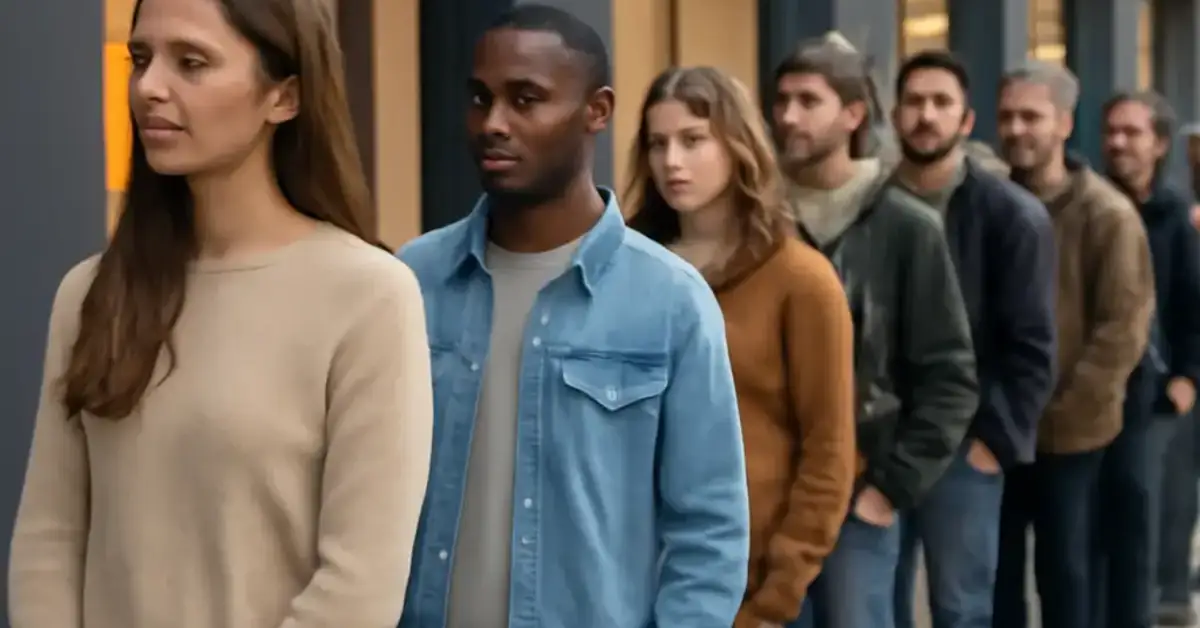
A winding line on the sidewalk seems like an inconvenience—until you realize it’s a free, highly effective marketing tool. Retail psychologist Dr. Kit Yarrow once noted that “waiting signals desirability.” When shoppers see a long queue, their brains switch from Do I need this? to Why does everyone else want it so badly? This shift bypasses logic and activates FOMO.
Fashion labels like H and M and Zara have used this for decades. New collection drops trigger long queues outside flagship stores, turning a routine Tuesday into an event. The marketing psychology behind queues isn’t new—it’s as old as black markets, but modern brands have perfected it. For a related guide, see Village Park Restaurant Review: 5 Must-Try Malaysian Dishes.
Why People Queue: The Deep Psychological Drivers
Understanding why people queue requires unpacking three core biases. First, social proof: if 50 people are waiting, the product must be worth it. Second, scarcity: limited stock or time pushes us to act fast. Third, commitment bias: once we’ve stood in line for 20 minutes, leaving feels like a loss. Together, these forces create a feedback loop that keeps lines growing.
The 5 Proven Marketing Lessons Hidden in Long Queues
Let’s break down exactly how top brands deploy these tactics—and how you can apply them without angering your customers.
1. Scarcity: The Drop Culture Playbook
Supreme built a billion-dollar streetwear empire on limited drops. Every Thursday morning, fans line up blocks before the store opens. The marketing psychology behind queues here is pure scarcity: once the 200 units sell out, they’re gone forever (or resold for 10x price).
How to use it: Release limited editions, flash sales, or seasonal exclusives. Communicate clear limits (“Only 50 kits per store”). The line validates the scarcity.
Real-World Example: Nintendo Switch Launch
In 2017, Nintendo deliberately understocked retail partners for the Switch launch. Long queues appeared nationwide, generating free news coverage. The “shortage” narrative directly boosted demand, pushing units to 2.7 million in the first month.
2. Social Proof: The Crowded Restaurant Effect
New Yorkers judge a pizzeria by the length of its lunch line. The same logic applies online. A long queue outside a restaurant signals “best in class” to passersby. This is why bakeries in Paris often bake small batches throughout the day—the constant trickle of customers makes the shop appear perpetually busy.
Actionable strategy: Display live wait times (“Order #45 being served now”) on your website or storefront. Or use countdown widgets on landing pages showing how many people are viewing an offer concurrently.
3. FOMO: The Fear That Fuels Long Queues
FOMO (Fear Of Missing Out) is the adrenaline behind why people queue for sneaker drops, Black Friday sales, and concert tickets. When customers believe others might get the last unit, waiting feels like a rational choice.
Brands like Ticketmaster amplify FOMO with dynamic pricing and “almost sold out” notifications. In retail, Disney’s virtual queue system for Rise of the Resistance created digital long queues that filled within seconds—yet guests celebrated getting a spot.
Try this: Add social proof pop-ups on your e-commerce site (“3 others are viewing this deal right now”). Combine with a ticking countdown timer to maximize urgency.
4. Commitment and Consistency: The Sunk Cost of Waiting
Once someone invests time in a long queue, they’re less likely to abandon it—even if a better option appears. This is the “sunk cost” bias. Coffee chains like Blue Bottle exploit this by placing the order counter at the end of a deliberately slow-moving line, surrounded by display cases of pastries. You’ve already waited 10 minutes – might as well add a croissant.
Application: If you run a service business, consider a “staged” process. Have customers fill a form first, then wait for a consultation. The longer the initial step, the higher the conversion rate.
5. Exclusivity and Status: The VIP Lane
Long queues create a byproduct: the VIP bypass. Nightclubs, airlines, and even tech conferences sell “skip-the-line” passes. This tiered system makes the general queue feel like a badge of honor for non-VIPs and a status symbol for those who cut it. Apple does this with pre-order windows: early adopters queue virtually, gaining access before the masses.
For your brand: offer an early-access tier or a loyalty program that “jeeps the line.” The contrast between the waiting crowd and the fast-tracker reinforces exclusivity for both groups.
| Lesson | Psychological Trigger | Brand Example | How to Apply |
|---|---|---|---|
| 1. Scarcity | Limited availability | Supreme drops | Create low-stock alerts |
| 2. Social Proof | Herding behavior | Paris bakeries | Show live customer count |
| 3. FOMO | Fear of missing out | Disney virtual queue | Use countdown timers + pop-ups |
| 4. Commitment | Sunk cost bias | Blue Bottle Coffee | Design multi-step wait processes |
| 5. Exclusivity | Status signaling | Apple pre-orders | Offer skip-the-line tiers |
When Long Queues Backfire: The Risk of Overplaying the Trick
Not all long queues are good. A perpetually slow bank line or a confusing checkout process frustrates customers and kills loyalty. The marketing psychology behind queues only works when the wait feels justified—by quality, rarity, or prestige. If customers suspect artificial scarcity (like a fake sold-out badge on a fully stocked item), trust evaporates. For a related guide, see 7 Smart Secrets Behind the Dining Experience at Village Park Restaurant.
Key Warning Signs
- Wait times exceed 20 minutes without entertainment (water, music, seating).
- Customers can’t see the end of the queue or estimate their wait.
- The line forms because of poor service speed, not high demand.
Mitigate these with transparent communication. Some luxury hotels show electronic wait boards saying “Estimated wait: 8 minutes”—this turns frustration into anticipation.
Your Challenge: Spot The Secret Behind Long Queues in Real Life
Next time you see a long queue at a ramen shop or a pop-up market, stop and analyze. Is the line genuine (because the food is incredible) or manufactured (limited bowls per hour)? Train your eye to spot the psychological triggers at play. Then adapt them ethically in your own business.
Useful Resources
For deeper insight into behavioral economics behind queuing, read Social Proof on Psychology Today. To understand scarcity marketing in digital campaigns, check out Neil Patel’s Guide to Scarcity Marketing.
Frequently Asked Questions About The Secret Behind Long Queues
What is The Secret Behind Long Queues in marketing?
It refers to using psychological triggers like scarcity, social proof, and FOMO to create demand by making waiting appear valuable.
Why do people stand in long queues voluntarily?
Because the queue signals that the product or experience is worth waiting for, activating social proof and anticipation.
How do brands create the illusion of high demand?
Through limited stock releases, timed drops, countdown timers, and showing how many people are viewing or buying.
Can long queues hurt a brand?
Yes, if the wait is unmanaged, unclear, or the product doesn’t deliver. Poor customer experience can turn the queue into a negative signal.
What role does social proof play in queuing?
People look to others for cues on what’s valuable. A long queue is the strongest visual proof of desirability.
How does FOMO relate to long queues ?
FOMO drives urgency—seeing others get something makes us fear missing out, pushing us to join the line quickly.
What is “sunk cost” in queue psychology?
Once you’ve invested time waiting, you’re more likely to stay and buy, even if doubts arise.
Do digital queues work the same as physical ones?
Yes. Online waitlists, live counters, and countdown timers trigger the same psychological biases as physical lines.
How can small businesses use queue psychology?
Offer limited-time bundles, display “only 5 left” notices, or show social proof with live visitor counts.
What’s the difference between a good queue and a bad queue?
A good queue feels exciting and transparent; a bad queue is chaotic, too long, or unclear about wait time.
Why do luxury brands use queues deliberately?
To reinforce exclusivity—waiting becomes a status signal that only dedicated customers can access.
Is artificial queue marketing ethical?
It’s ethical if the product genuinely delivers value and the scarcity is real. Fake scarcity damages trust long-term.
How does Disney use queue psychology?
Disney uses themed queues with entertainment, then virtual queue systems that make waiting feel like part of the adventure.
What is “artificial scarcity”?
When a brand limits supply or time without any genuine production constraint, purely to drive demand.
Can queue psychology apply to content marketing?
Yes. Creating an exclusive webinar with limited seats or a report with “only 100 downloads” builds FOMO.
How can I measure if my queue strategy is working?
Track conversion rate from waitlist to purchase, bounce rate, social media shares about the drop, and customer feedback.
What’s the best way to announce a limited drop?
Use email teasers a week before, then launch with a countdown timer and a live queue number visible on site.
Do all cultures respond the same to queues?
No. In countries like Japan, orderly queues are a sign of politeness; in others, lines can feel like inefficiency. Know your audience.
How long should a queue last for maximum impact?
Between 5 and 15 minutes is ideal—long enough to build anticipation, short enough to avoid frustration.
What’s the opposite “secret” of a long queue?
Speed and convenience. For commodity goods, no queue is the best queue. The secret works only for high-perceived-value items.