


Malaysian snacks perfect for tea time Key Takeaways
Malaysia’s teatime tradition blends local flavors borrowed from Malay, Chinese, and Indian cultures into a casual, comforting ritual.
- The best Malaysian snacks perfect for tea time range from kuih lapis to curry puffs, each with its own texture and flavor profile.
- Pairing suggestions help you match the snack with your tea — kopi tarik, teh tarik, or plain black tea works best.
- These snacks work equally well for afternoon tea parties, quick bites, or even breakfast.
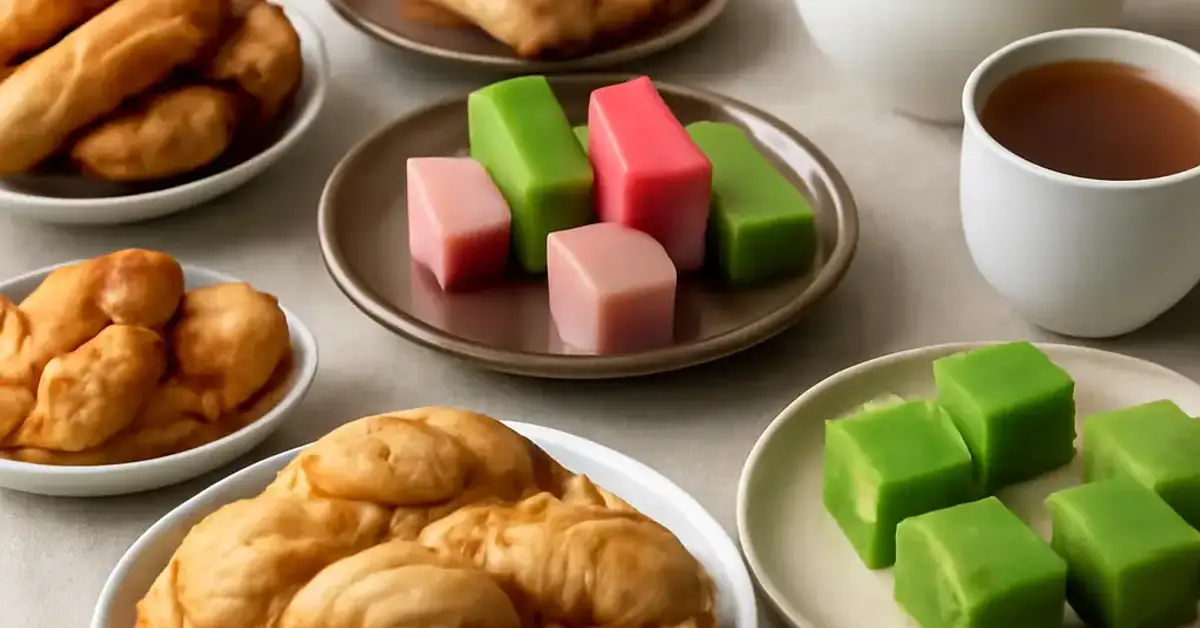
Why Malaysian Snacks Perfect for Tea Time Are So Beloved
In Malaysia, teatime isn’t just about a beverage — it’s a moment to slow down, share stories, and satisfy a small hunger. From mamak stalls to kopitiams, the array of Malaysian tea time snacks is staggering. The culture borrows from three major culinary traditions, so you’ll find sweet coconut-based kuih, flaky fried pastries, and spicy rice rolls all on the same table. For a related guide, see Malaysian Cuisine Seafood Dishes: 7 Essential Plates You Must Try.
What makes these snacks so perfect for tea is their moderate size and balanced flavors. They’re not heavy meals, but they are satisfying enough to carry you until dinner. Moreover, many of them are naturally gluten-free or vegetarian, making them inclusive for diverse households.
7 Best Malaysian Snacks for Tea You Must Try
Below are seven iconic Malaysian snacks perfect for tea time, each with a brief description, a cultural note, and a pairing suggestion to enhance your experience.
1. Kuih Lapis
Description: A steamed, layered cake made from rice flour, coconut milk, and sugar. The layers are typically pink and white or green and white, giving it a striking appearance. The texture is slightly firm yet bouncy.
Cultural note: Kuih lapis is a staple at Malaysian tea tables and festive occasions. Its name literally means “layered cake,” and the process of steaming each layer separately takes patience — a true labor of love.
Pairing suggestion: Serve with a hot cup of teh tarik (pulled milk tea) to balance the mild sweetness.
2. Curry Puffs
Description: Flaky, deep-fried pastry parcels filled with curried potatoes, chicken, or eggs. The crust is buttery and crisp, while the filling is aromatic with curry powder and turmeric.
Cultural note: Curry puffs are a common street food and are usually eaten as a savoury treat any time of day. They’re also popular as Malaysian tea time snacks at gatherings.
Pairing suggestion: Match with a simple black tea or kopi O (black coffee without sugar) to offset the richness.
3. Kuih Seri Muka
Description: A two-layered dessert with a bottom crust of glutinous rice pressed into a pan and a top layer of creamy pandan custard. The contrast between the chewy rice and silky custard is delightful.
Cultural note: This kuih is a favorite across Malaysia and Indonesia. The pandan (screwpine leaf) gives it a natural, floral aroma that pairs beautifully with tea.
Pairing suggestion: Enjoy with green tea or jasmine tea to enhance the pandan fragrance.
4. Popiah Basah
Description: Unlike the fried spring roll, popiah basah is a soft, wet version filled with shredded jicama (turnip), bean sprouts, and sometimes tofu, wrapped in a thin crepe-like skin. A sweet and savory soy-based sauce is drizzled inside.
Cultural note: Popiah basah is a classic Penang snack, often sold by Nyonya vendors. The “wet” texture comes from the sauce and fresh fillings, setting it apart from the fried version.
Pairing suggestion: Pair with a light oolong tea or chrysanthemum tea to cleanse the palate.
5. Kuih Talam
Description: A two-tone steamed cake with a white coconut milk top layer and a green pandan bottom layer. The texture is soft, wobbly, and slightly moist — similar to a jelly.
Cultural note: Kuih talam translates to “layer cake,” but it’s served in a slab rather than rolled. It’s a popular choice for Malaysian kuih for afternoon tea spreads because its mild sugar level means you can eat a few pieces without feeling overly sweet.
Pairing suggestion: Drink with chamomile tea or a mild black tea to keep the flavors simple.
6. Ondeh-ondeh
Description: Small, round glutinous rice balls colored green with pandan juice, filled with liquid palm sugar (gula Melaka), and rolled in grated coconut. When you bite into one, the sugar syrup bursts out.
Cultural note: Ondeh-ondeh is a favorite best Malaysian snacks for tea because of its surprise filling. The process of rolling them in coconut ensures they don’t stick together and adds a nutty flavor.
Pairing suggestion: A robust English breakfast tea or a strong, less sweet coffee contrasts with the burst of gula Melaka.
7. Cincin
Description: Also known as “kuih cincin,” these are deep-fried rings made from rice flour and coconut milk, dusted with sugar after cooking. They are crunchy, airy, and slightly oily — similar to doughnuts.
Cultural note: Cincin is a traditional Malay snack, often prepared during festive seasons like Hari Raya. The ring shape symbolizes unity and completeness.
Pairing suggestion: Serve with a hot cup of mint tea or a ginger-flavored tea to cut through the oiliness.
Where to Find These Malaysian Snacks Perfect for Tea Time
You don’t need to travel to Malaysia to enjoy these treats. Many Asian grocery stores carry frozen or vacuum-packed kuih and popiah wrappers. Alternatively, you can make them at home — the ingredients (pandan leaves, gula Melaka, rice flour, coconut milk) are widely available online and in specialty stores. For authentic Malaysian tea time snacks, look for Nyonya or Malay food blogs that share step-by-step recipes. For a related guide, see Malaysian Cuisine Desserts: 7 Must-Taste Sweet Treats Worth Every Bite.
Making Your Own: Quick Tips
If you try making any of these best Malaysian snacks for tea at home, keep these tips in mind:
- Steaming basics: Most kuih require a steady steam; use a bamboo steamer or a metal one with a lid wrapped in a cloth to prevent water droplets from falling on the cakes.
- Gula Melaka: This unrefined palm sugar is key for many sweet kuih and ondeh-ondeh. You can find it as solid blocks or in syrup form.
- Fresh coconut: For coatings, always use freshly grated coconut (or frozen, thawed) — dried shredded coconut is too dry for the texture you want.
Useful Resources
If you want to dive deeper into Malaysian cuisine or buy authentic ingredients, these sources are reliable and well reviewed:
- Step-by-step Kuih Lapis recipe at Malaysian Food — a trusted blog with traditional Malay recipes.
- Ondeh-ondeh recipe from Rasa Malaysia — a popular website that explains the technique for perfect syrup-filled balls.
Enjoying Malaysian Snacks Perfect for Tea Time at Home
There you have it — seven tried-and-true Malaysian snacks perfect for tea time that offer a genuine taste of the country’s vibrant food culture. Whether you buy them from a local Asian market or take the time to make them from scratch, each snack brings its own story and flavor to your table. Grab a cup of your favorite tea, settle in, try a few of these treats, and you’ll soon understand why Malaysian teatime is such a cherished daily ritual.
Frequently Asked Questions About Malaysian snacks perfect for tea time
What is the most popular Malaysian snack for tea time?
Curry puffs are arguably the most popular — they are savory, crispy, and widely available at street stalls and kopitiams across Malaysia.
Are Malaysian tea time snacks mostly sweet or savory?
Both. Traditional Malaysian tea time snacks include sweet kuih (like kuih lapis) and savory items (like popiah basah or curry puffs), so there is something for every palate.
What is the difference between kuih and regular cakes?
Kuih usually rely on rice flour, tapioca, or glutinous rice flour instead of wheat flour, and they often incorporate coconut milk and pandan. They are also steamed rather than baked, giving them a distinct moist, bouncy texture.
Can I find these snacks in a regular grocery store?
Outside of Southeast Asia, you likely need to visit an Asian supermarket or order online. Some international sections in major chains may carry frozen popiah or curry puff brands.
Which tea pairs best with sweet kuih?
Light teas like jasmine, green tea, or chrysanthemum complement the sweetness of kuih without overwhelming the coconut and pandan flavors.
What is gula Melaka?
Gula Melaka is a dark, unrefined palm sugar from Malaysia. It has a smoky, caramel flavor and is used in many kuih and ondeh-ondeh as a filling or sweetener.
Are these snacks gluten-free?
Most traditional kuih are gluten-free because they use rice flour or glutinous rice flour. However, curry puff pastry contains wheat flour, so check ingredients if gluten is a concern.
Can I make these snacks vegan?
Yes. Many kuih use coconut milk instead of dairy, and you can substitute chicken in curry puffs with potatoes and vegetables. Just check that the curry paste contains no shrimp paste.
How long do steamed kuih last?
Steamed kuih like kuih lapis and kuih talam can last 2–3 days at room temperature in an airtight container. Refrigerating them may dry them out, so re-steam gently before serving.
What is popiah basah?
Popiah basah is a soft, wet spring roll filled with jicama, bean sprouts, and sometimes tofu, wrapped in a thin crepe. It is a specialty from Penang, famous for its fresh, savory sauce.
Do Malaysian tea time snacks contain dairy?
Most traditional snacks are dairy-free because they rely on coconut milk. But some modern versions or dough-based items (like curry puff dough) may contain butter. Always read labels or ask the vendor.
Where can I buy pandan leaves?
Pandan leaves are sold fresh or frozen at Asian grocery stores. You can also find pandan extract or paste for convenience, though fresh leaves yield a more authentic aroma.
What is the best time to serve these snacks?
Afternoon tea — around 3–4 PM — is the classic time in Malaysia. But these bites work for breakfast, lunch sides, or even midnight snacks.
How many pieces should I prepare per person?
For a tea spread, 3–5 small pieces (like 3 curry puffs or 4 kuih lapis slices) per person is typical. People often try a variety rather than just one snack.
Can I freeze homemade kuih?
Yest, most kuih freeze well individually wrapped in plastic. Thaw in the fridge and re-steam for 5–10 minutes to restore their original texture.
Are these snacks suitable for kids?
Absolutely. Kids love the playful colors of kuih lapis and the sweet burst of ondeh-ondeh. Just be careful with hot fillings in curry puffs.
What is the difference between kuih talam and kuih seri muka?
Both are two-layered steamed cakes, but kuih talam has a pandan base and a white coconut top (often slightly wobbly), while seri muka has a thick glutinous rice bottom and a pandan custard top that is firmer.
Do I need special equipment to make kuih?
Not really. A steamer (bamboo or metal), mixing bowls, and a square or round tray are sufficient. Some kuih may require a parchment-lined pan for easy removal.
Is kueh the same as kuih?
Yes, “kueh” is the Indonesian spelling while “kuih” is the Malay spelling used in Malaysia, Singapore, and Brunei. Both refer to the same category of bite-sized sweets or snacks.
Can I serve these snacks hot or cold?
Most kuih are best at room temperature or slightly warm. Curry puffs should be hot and crispy. Popiah basah is served cold or at room temperature.