


Malaysian cuisine desserts Key Takeaways
Malaysia’s dessert scene is a vibrant blend of coconut milk, palm sugar, pandan, and tropical fruits.
- Most Malaysian cuisine desserts rely on natural sweeteners like gula Melaka and fresh coconut.
- Street stalls and kopitiams are the best places to try authentic kuih and ice-based sweets.
- Many desserts have regional variations influenced by Chinese, Malay, and Indian traditions.
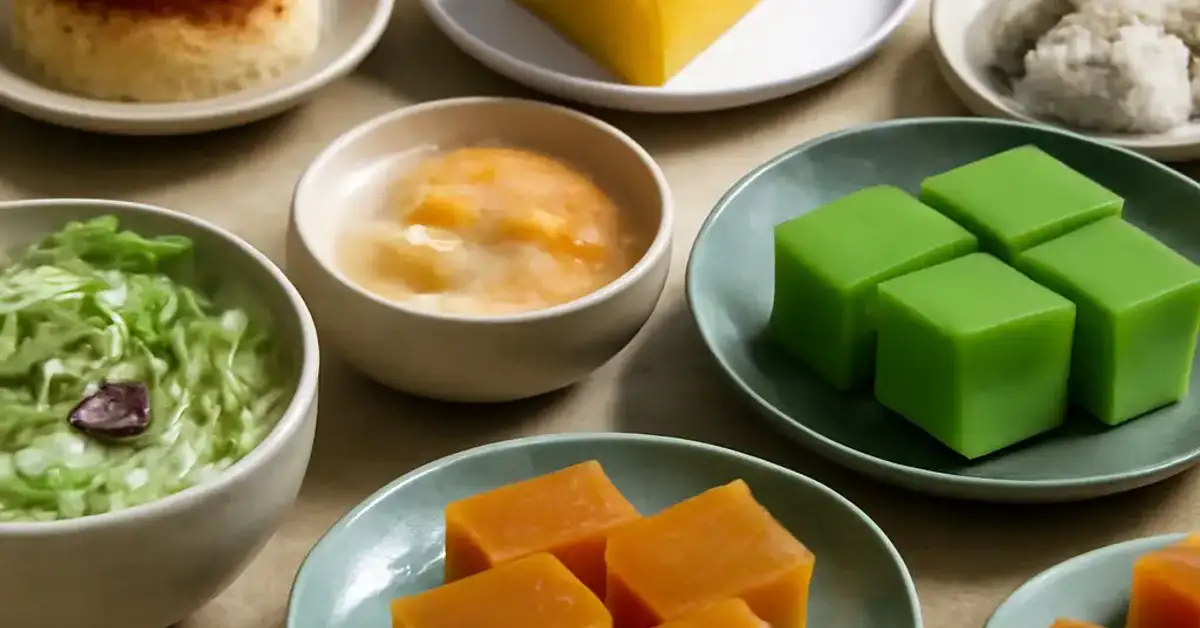
What Makes Malaysian Cuisine Desserts So Unique?
Malaysia sits at the crossroad of major trade routes, which means its sweets borrow from Malay, Chinese, Indian, and Eurasian kitchens. The result? A dessert vocabulary built around sticky rice, shaved ice, coconut cream, and pandan. You’ll rarely find heavy butter creams or chocolate here. Instead, expect fragrant syrups, jelly-like cakes, and chilled bowls that fight the tropical heat.
Below are seven must try Malaysian sweets that will change how you think about dessert.
7 Must Try Malaysian Sweets You Can’t Miss
1. Cendol — The Iconic Shaved Ice Classic
Cendol is the poster child of Malaysian cuisine desserts. A bowl of finely shaved ice is piled high with green pandan jelly noodles, kidney beans, creamed corn, and soft cubes of sweet potato. The entire thing is drenched in coconut milk and a thick pour of gula Melaka (palm sugar syrup).
Key ingredients: Shaved ice, pandan jelly, coconut milk, gula Melaka, kidney beans.
Why it’s unique: The mix of sweet, salty (from the coconut milk) and nutty syrup creates a flavor that’s oddly addictive. The green jelly is made from rice flour and pandan juice, giving it a floral aroma that cuts through the richness.
2. Kuih Lapis — Steamed Layer Cake
Kuih lapis is a steamed coconut-rice flour cake with vivid layers of pink, green, and white. Each layer is cooked separately, so the final cake has a soft, bouncy texture that’s slightly chewy.
Key ingredients: Rice flour, tapioca starch, coconut milk, sugar, pandan, food coloring.
Why it’s unique: The process is meditative — each layer must set before the next is poured. The result is a mellow sweetness with a delicate coconut finish.
3. Pulut Inti — Sticky Rice with Sweet Coconut
Pulut inti features a mound of glutinous rice steamed in coconut milk and pandan, topped with a sweet coconut jam called inti. The topping is made by cooking grated coconut with gula Melaka until thick and slightly sticky.
Key ingredients: Glutinous rice, coconut milk, pandan leaves, grated coconut, gula Melaka.
Why it’s unique: The contrast between the savory-scented rice and the syrupy coconut topping is pure comfort. It’s often wrapped in banana leaves for an added earthy aroma.
4. Ais Kacang — Rainbow Shaved Ice
Ais kacang (also called ABC – Air Batu Campur) is a towering bowl of shaved ice drizzled with rose syrup, evaporated milk, and palm sugar. Underneath the ice hides a treasure of red beans, grass jelly, sweet corn, and cubes of jelly.
Key ingredients: Shaved ice, red beans, grass jelly, sweet corn, rose syrup, evaporated milk.
Why it’s unique: The bright syrup colors make it a feast for the eyes, but the real magic is the hidden savory-sweet layers. Every spoonful delivers a different combination.
5. Ondeh-Ondeh — Bite-Sized Coconut Balls
Ondeh-ondeh are small glutinous rice balls stuffed with liquid gula Melaka and rolled in fresh grated coconut. Once boiled, the sugar centre melts into a warm syrup that bursts when bitten.
Key ingredients: Glutinous rice flour, pandan juice, gula Melaka, grated coconut.
Why it’s unique: The texture is soft and chewy on the outside, with a molten sugar centre that’s dangerously hot. The coconut coating adds a faint nutty crunch.
6. Bubur Cha Cha — Sweet Potato Coconut Pudding
Bubur cha cha is a warm or chilled dessert soup with cubes of sweet potato, taro, and sago pearls swimming in a coconut milk broth sweetened with palm sugar. Bananas are sometimes added for extra body.
Key ingredients: Sweet potato, taro, sago pearls, coconut milk, pandan, gula Melaka, banana.
Why it’s unique: The root vegetables give it a hearty, chunky texture that feels more like a meal than a dessert. The sago pearls add a playful pop between bites.
7. Kuih Seri Muka — Two-Layer Coconut Custard Cake
Kuih seri muka combines a dense glutinous rice bottom with a smooth pandan custard top. The custard is made from eggs, coconut milk, and pandan juice, set to a wobbly jelly consistency.
Key ingredients: Glutinous rice, coconut milk, eggs, pandan juice, sugar.
Why it’s unique: The dual layer gives you a chewy base and a silky top. Pandan lovers will appreciate the jasmine-like fragrance that lingers after every slice.
Where to Find the Best Malaysian Cuisine Desserts
You’ll find these Malaysian cuisine desserts at hawker centres, morning markets (pasar pagi), and traditional kopitiam (coffee shops). In Kuala Lumpur, head to Jalan Alor or Petaling Street for a concentrated hit. In Penang, Gurney Drive Hawker Centre is a reliable spot. For the most authentic experience, look for stalls that make kuih fresh daily — the texture declines sharply after a few hours. For a related guide, see 7 Essential Malaysian Cuisine Tips for Authentic Dishes Today.
Comparison of Key Malaysian Desserts
| Dessert | Base | Sweetener | Typical Temperature |
|---|---|---|---|
| Cendol | Shaved ice, green jelly | Gula Melaka | Cold |
| Kuih Lapis | Rice flour, coconut milk | Sugar | Room temp |
| Pulut Inti | Glutinous rice, coconut | Gula Melaka | Room temp |
| Ais Kacang | Shaved ice, beans, jelly | Rose syrup, evaporated milk | Cold |
| Ondeh-Ondeh | Glutinous rice flour | Liquid gula Melaka | Warm |
| Bubur Cha Cha | Sweet potato, sago | Gula Melaka | Warm or cold |
| Kuih Seri Muka | Glutinous rice, custard | Sugar, pandan | Room temp |
Why You Should Try All Seven
Tasting these seven desserts gives you a crash course in Malaysian cuisine desserts. You’ll discover how palm sugar can be both a syrup and a solid, how coconut milk works as both a base and a topping, and why pandan is called the “vanilla of Southeast Asia.” Each dessert tells a story of cultural fusion — a Chinese-inspired shaved ice becomes local with gula Melaka; an Indian-introduced glutinous rice cake gets a coconut twist. For a related guide, see Malaysian Cuisine Guide: 7 Must-Try Local Favorites and Expert Tips.
Don’t stop at one. Order two or three from a single stall and share with friends. That’s how Malaysians eat dessert: communal, loud, and always with a spoon ready for another bite.
Useful Resources
For more background on the cultural history of these sweets, check out The Star’s beginner guide to Malaysian kuih. For a deeper dive into the science of pandan and coconut milk pairings, read Saveur’s feature on Malaysian desserts.
Frequently Asked Questions About Malaysian cuisine desserts
What is the most popular Malaysian dessert?
Cendol is widely considered the most iconic Malaysian cuisine desserts, thanks to its refreshing shaved ice and rich gula Melaka syrup.
What are the main ingredients in Malaysian desserts ?
Coconut milk, glutinous rice, pandan leaves, and palm sugar (gula Melaka) form the backbone of most traditional sweets.
Are Malaysian desserts very sweet?
They are sweet but rarely cloying. Palm sugar has a complex caramel note, and coconut milk or pandan balances the sweetness.
Where can I buy authentic Malaysian kuih?
Morning markets (pasar pagi) and traditional kopitiam in Malaysia offer the freshest selection. Some Asian grocery stores abroad stock frozen versions.
Are Malaysian desserts gluten-free?
Many are naturally gluten-free because they use rice flour and tapioca starch instead of wheat flour. Always verify with the vendor.
What is gula Melaka made of?
Gula Melaka is unrefined palm sugar made from the sap of coconut palm flower buds. It has a deep, smoky caramel flavor.
Can I find vegan Malaysian desserts ?
Yes, desserts like cendol, ais kacang, and bubur cha cha are often vegan when prepared without egg-based toppings.
What does pandan taste like?
Pandan has a fragrant, grassy, vanilla-like aroma with subtle nutty notes. It is used both as a flavor and a natural green color.
Is cendol served hot or cold?
Cold. It is a shaved ice dessert meant to cool you down in the tropical heat.
What is the difference between cendol and ais kacang?
Cendol features green pandan jelly as its main element, while ais kacang is a mixed bowl of beans, jelly, and creamed corn under shaved ice.
How long do kuih last at room temperature?
Most kuih stay fresh for about a day at room temperature. Refrigeration can extend their life, but the texture may become firmer.
Are Malaysian desserts halal?
Most traditional Malaysian cuisine desserts are halal, as they avoid pork, alcohol, and non-halal gelatin. Always check with the vendor.
What is the best time to eat ice-based Malaysian desserts ?
Midday or early afternoon, when the heat peaks. Malaysians often enjoy them as a midday snack rather than after dinner.
Can I make Malaysian desserts at home?
Yes, many are accessible for home cooks. Kuih lapis and ondeh-ondeh are good starting points, and recipes are widely available online.
What is the shelf life of kuih seri muka?
Up to two days in the fridge. The glutinous rice base may harden, so steam it briefly before serving to restore softness.
Do Malaysian desserts use a lot of sugar?
They rely on natural and processed sugars, but portions are typically small — one or two bites of kuih, or a modest bowl of cendol.
What is the texture of ondeh-ondeh?
Soft, chewy, and slightly spongy on the outside, with a liquid sugar centre that bursts when bitten.
Are Malaysian desserts similar to Indonesian desserts?
There is overlap — cendol and ondeh-ondeh appear in both cuisines — but Malaysian versions often emphasize gula Melaka more heavily.
What is the signature dessert of Penang?
Penang is famous for its cendol, especially the version sold at Joo Hooi Cafe in George Town.
Can I order these desserts online?
Some specialty food stores ship dried kuih mixes and bottled gula Melaka. Fresh versions are best enjoyed locally whenever possible.