


Malay Cuisine Guide Key Takeaways
This Malay Cuisine Guide introduces 12 essential dishes that define traditional Malay food , with descriptions, ingredients, and serving tips.
- Discover 12 must-try Malay dishes explained from appetizers to desserts
- Learn authentic ingredients and cooking techniques for each dish
- Understand regional differences across Malaysia, Singapore, and Indonesia
Why This Malay Cuisine Guide Is Your Gateway to Traditional Flavors
Malay cuisine is a vibrant tapestry woven from centuries of trade, migration, and cultural exchange. Born from the Malay Archipelago, it blends indigenous ingredients like coconut, lemongrass, and turmeric with influences from India, China, the Middle East, and Europe. The result is a cuisine that is fragrant, spicy, and deeply comforting.
This guide will walk you through 12 essential dishes, each with a clear description, key ingredients, and expert serving tips. Whether you’re a curious home cook or a seasoned traveler, you’ll gain practical knowledge to recreate or appreciate these iconic meals. For a related guide, see Top Indian Cuisine Experiences: 9 Essential Dishes to Try.
Appetizers and Street Snacks: The Heart of Traditional Malay Food
Malaysian appetizers and street snacks are bold, portable, and packed with flavor. They set the stage for a full meal or stand alone as satisfying bites.
1. Satay — Grilled Skewers with Peanut Sauce
Satay is perhaps the most famous Malay dish explained globally. Marinated chicken or beef skewers are grilled over charcoal and served with a rich, slightly sweet peanut sauce, cucumber slices, and ketupat (compressed rice cakes). The marinade typically includes turmeric, lemongrass, and coconut milk, giving the meat a golden hue and tender texture.
Serving tip: Always serve satay with the sauce on the side so guests can dip to their preference. For extra authenticity, use banana leaf plates.
2. Curry Puffs (Karipap)
These deep-fried pastries are stuffed with a savory filling of curried potato, chicken, and sometimes a hard-boiled egg. The flaky crust is made from pastry dough enriched with ghee or margarine, creating a delicate crunch. Curry puffs are a staple at Malaysian tea houses and family gatherings.
Serving tip: Serve warm with a side of fresh green chili for a spicy kick.
3. Otak-Otak — Grilled Fish Custard
Otak-otak is a steamed or grilled fish cake made from a spice paste of lemongrass, galangal, turmeric, and chili, mixed with coconut milk and eggs. Traditionally wrapped in banana leaves, it has a custard-like texture and a bright orange color. It’s a common street food found in Johor and Singapore.
Serving tip: Enjoy otak-otak as a snack or appetizer, paired with a squeeze of calamansi lime.
Main Courses: The Soul of Malay Cuisine
These hearty dishes form the backbone of any Malay feast, featuring slow-cooked meats, fragrant coconut rice, and spicy gravies.
4. Nasi Lemak — The National Dish
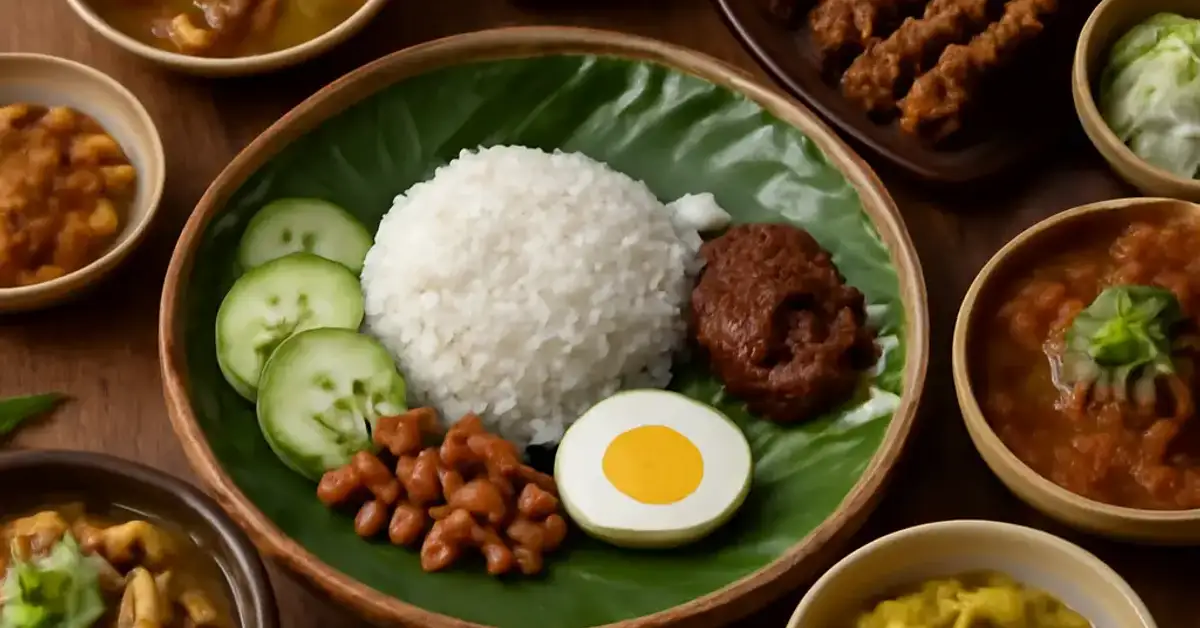
Nasi lemak is Malaysia’s unofficial national dish. It consists of coconut milk-infused rice served with sambal (spicy chili paste), crispy anchovies, toasted peanuts, hard-boiled egg, and cucumber slices. The rice is cooked with pandan leaves and ginger, giving it a floral aroma. Many versions add fried chicken or beef rendang.
Serving tip: Wrap the components in a banana leaf for a traditional experience that also enhances the fragrance.
5. Beef Rendang — Slow-Cooked Spiced Beef
Beef rendang is a dry curry that originated from the Minangkabau culture in Sumatra and is now a cornerstone of Malay cuisine. Beef chunks are simmered for hours in coconut milk and a paste of galangal, lemongrass, turmeric, garlic, and chili until the liquid evaporates and the meat becomes tender and deeply caramelized. The result is a rich, aromatic dish that keeps well for days.
Serving tip: Serve rendang with nasi lemak or plain steamed rice. It tastes even better the next day as the flavors meld.
6. Ayam Percik — Grilled Chicken in Coconut Sauce
A signature dish from Kelantan, ayam percik features chicken marinated in a thick, spicy coconut sauce then grilled over charcoal. The sauce is made from dried chilies, turmeric, lemongrass, garlic, and coconut milk. During grilling, the chicken is repeatedly basted with the sauce, creating a sticky, caramelized crust.
Serving tip: Serve with white rice and a side of ulam (fresh herbs and vegetables).
7. Laksa — Spicy Noodle Soup
Laksa is a spicy noodle soup with many regional variations. The most famous is Asam Laksa from Penang, which uses a tamarind-based fish broth with flaked mackerel, pineapple, cucumber, mint, and thick rice noodles. A rich, coconut-based version called Curry Laksa is popular in Kuala Lumpur and Singapore.
Serving tip: Customize your laksa with extra sambal and a squeeze of lime to balance the richness.
Desserts and Sweet Treats: Balancing Heat with Sweetness
Malay desserts often use coconut milk, palm sugar, and tropical fruits to create cooling, satisfying end notes.
8. Cendol — Icy Coconut Dessert
Cendol is a beloved dessert made with shaved ice, green rice flour jelly, coconut milk, and a generous helping of palm sugar syrup (gula Melaka). The jellies have a slightly chewy texture and are often infused with pandan juice for color and fragrance. It’s a perfect refreshment after a spicy meal.
Serving tip: Add a scoop of red beans or sweet corn for extra texture.
9. Kuih Lapis — Layered Steamed Cake
Kuih lapis is a traditional steamed cake made from rice flour, tapioca flour, sugar, and coconut milk. It is colored in alternating layers (often pink and white or green and white) and has a soft, slightly chewy texture. The cake requires patience to steam each layer before adding the next.
Serving tip: Slice into small diamond shapes for an elegant presentation at tea time.
Drinks: Quenching the Spice
No Malay meal is complete without a signature drink to balance the bold flavors.
10. Teh Tarik — Pulled Milk Tea
Teh tarik is a strong black tea mixed with condensed milk, then repeatedly “pulled” between two cups to create a frothy layer. The technique aerates the tea, giving it a creamy texture and slightly sweet taste. It’s a staple at Malaysian hawker centers.
Serving tip: Watch the tea being pulled if you can — it’s part of the experience.
11. Air Bandung — Rose Syrup Drink
Air bandung is a sweet, fragrant drink made by mixing rose syrup with evaporated milk or condensed milk, then diluting with water or ice. It has a pink hue and floral aroma, perfect for cooling down in tropical heat.
Serving tip: Garnish with a few mint leaves for a refreshing twist.
Regional Variations: A Malay Cuisine Guide Across Borders
Malay dishes explained vary significantly across the archipelago due to local ingredients and cultural influences.
| Region | Key Influence | Signature Dish |
|---|---|---|
| Peninsular Malaysia (West) | Thai and Indian flavors | Asam Laksa, Nasi Kandar |
| East Coast Malaysia | Rich coconut-based curries | Nasi Dagang, Keropok Lekor |
| Sabah and Sarawak (Borneo) | Indigenous and wild ingredients | Linopot, Manuk Pansuh |
| Singapore | Hokkien and Peranakan twists | Laksa Lemak, Roti Prata |
| Indonesia (Sumatra) | Minangkabau rendang tradition | Rendang Padang, Gulai |
Each region offers a unique take on traditional Malay food, so exploring them is a journey in itself.
Glossary of Key Terms in Malay Cuisine
Understanding these terms will help you navigate menus and recipes.
- Sambal: A spicy chili paste often used as a condiment or base for dishes.
- Kerisik: Toasted grated coconut used as a thickener and flavoring in curries.
- Gula Melaka: Palm sugar with a rich, caramel-like flavor.
- Ulam: A platter of fresh herbs, vegetables, and fruits served as a salad or side.
- Pandan: Screwpine leaves used for fragrance in rice and desserts.
Useful Resources
For more in-depth recipes and cultural context, explore these trusted sources:
- Nyonya Cooking — Detailed recipes and stories from a Malaysian home cook.
- SBS Food: Malay Cuisine Guide — A curated list of essential dishes with background.
Frequently Asked Questions About Malay Cuisine Guide
What is the most famous Malay dish?
Nasi lemak is widely considered Malaysia’s national dish and is the most famous Malay dish explained worldwide.
What are the key ingredients in Malay cooking?
Essential ingredients include coconut milk, lemongrass, galangal, turmeric, chili, belacan (shrimp paste), and pandan leaves.
Is Malay cuisine very spicy?
It can be, but spice levels vary. Many dishes use chilies for flavor, but you can often request milder versions.
What is the difference between Malay and Indonesian cuisine?
While they share roots, Malay cuisine tends to be slightly sweeter and uses more coconut milk, while Indonesian dishes often feature more earthy spice blends.
What is a typical Malay breakfast?
A typical Malay breakfast includes nasi lemak, curry puffs, or roti canai with a cup of teh tarik.
How do you eat Malay food properly?
Traditionally, Malay food is eaten with the right hand, using fingers to scoop rice and curry. However, utensils are also common.
What is rendang curry?
Rendang is a dry curry made by slowly simmering meat in coconut milk and spices until the liquid evaporates, leaving a rich, caramelized coating.
Is Malay food healthy?
Many Malay dishes use fresh herbs, vegetables, and lean protein. However, some dishes are high in coconut milk and oil, so moderation is key.
What drink pairs best with spicy Malay food?
Teh tarik or a cold cendol are excellent choices to balance the heat.
Where can I find authentic Malay food outside Malaysia?
Look for restaurants in areas with large Malay communities, such as Singapore, southern Thailand, or parts of Indonesia.
What is the difference between laksa in Penang and Singapore?
Penang laksa (Asam Laksa) is tamarind-based and sour, while Singapore laksa (Curry Laksa) is rich and coconut-based.
Can I make Malay dishes at home?
Absolutely. Start with simple recipes like nasi lemak or satay, which use ingredients available in most Asian grocery stores.
What is kerisik used for?
Kerisik (toasted coconut) is used to thicken and flavor curries, especially rendang.
What is the best Malay dessert for beginners?
Cendol is easy to prepare and requires no cooking beyond making the jelly and palm sugar syrup.
Do Malays eat pork?
No, as a Muslim-majority culture, Malay cuisine is halal and does not include pork. Chicken, beef, and fish are common.
What is the cultural significance of nasi lemak?
Nasi lemak represents unity in diversity, as it is enjoyed by Malays, Chinese, and Indians alike.
How long does it take to make authentic rendang?
Authentic beef rendang takes 3-4 hours of slow cooking to achieve the perfect texture.
What is sambal made of?
Sambal is typically made from fresh or dried chilies, belacan, lime juice, and sometimes sugar or onions.
Is roti canai Malay or Indian?
Roti canai is of Indian origin but has become a beloved Malay and Malaysian street food staple. For a related guide, see 7 Essential Flavors Why Malaysian Cuisine Reflects Multicultural Heritage.
What is the ultimate Malay cuisine guide for beginners?
This very guide is the perfect starting point—start with nasi lemak, satay, and cendol, then explore rendang and laksa.