


Indian flavors Malaysian cuisine Key Takeaways
The story of Malaysian food is incomplete without the chapter written by Indian traders, laborers, and cooks.
- Indian flavors Malaysian cuisine center on bold spices—turmeric, cumin, fennel, and curry leaves—that now define Malaysia’s most beloved street food.
- Cooking techniques such as tempering (tadka) and slow-cooking in rich gravies were introduced by Indian migrants and adapted to local tastes.
- Iconic dishes like nasi kandar and curry laksa are living examples of how Indian, Malay, and Chinese traditions merged to create something uniquely Malaysian.
The Spice Route That Changed Malaysia’s Kitchen
Long before Malaysia became a modern culinary hotspot, the winds of the Indian Ocean carried more than just ships. They carried Indian influence Malaysia would feel for centuries—beginning with the arrival of Tamil merchants and Chettiar traders who brought cloves, cardamom, and black pepper to the shores of Penang and Melaka. These early spice exchanges planted the first seeds of what we now recognize as Indian flavors Malaysian cuisine.
In the late 19th and early 20th centuries, British colonial rule accelerated this migration. Thousands of South Indian laborers—mostly Tamils, Telugus, and Malayalis—came to work on rubber estates and railway projects. They brought not just their labor but their food memories: Malaysian Indian cuisine began taking shape in makeshift kitchens where fragrant rice, lentils, and coconut were transformed using techniques like tempering mustard seeds and curry leaves.
7 Essential Indian Flavors That Define Malaysian Food Today
These seven spices and ingredients are the backbone of Indian flavors Malaysian cuisine. Each one tells a story of adaptation and fusion.
1. Turmeric (Kunyit)
Turmeric gives Malaysian curries and nasi biryani their signature golden hue. Indian migrants used it not only for color but for its earthy, slightly bitter depth. Today, it appears in everything from rendang to ikan bakar, bridging Indian and Malay kitchens.
2. Cumin (Jintan Putih)
Cumin’s warm, nutty flavor is essential in Malay satay marinades and Indian-inspired dal. In Malaysian Indian cuisine, it is often dry-roasted before grinding, releasing an aroma that signals a dish is cooked with care.
3. Fennel (Jintan Manis)
Fennel seeds add a subtle sweetness and a hint of licorice. They are a key component in the spice blend used for nasi kandar gravies, where they balance the heat of chili and the richness of coconut milk.
4. Curry Leaves (Daun Kari)
No discussion of Indian flavors Malaysian cuisine is complete without curry leaves. They are fried in hot oil with mustard seeds to release their citrusy fragrance, then used to finish fish curries, fried rice, and even noodle dishes like curry laksa.
5. Mustard Seeds (Biji Saw)
Black mustard seeds are popped in hot oil to start countless Malaysian Indian dishes. This tempering technique—called tadka—is the first step in making sambal, dal, and many stir-fried vegetables. The crackling sound is the sound of tradition being passed down.
6. Cardamom (Buah Pelaga)
Green cardamom pods lend a floral, almost minty sweetness to biryani rice, teh tarik, and Malay kuih. Indian tea vendors introduced cardamom to Malaysian mamak stalls, where it now flavors the nation’s favorite pulled tea.
7. Chili (Cili)
Though chili is not native to India, it was enthusiastically adopted by Indian cooks and brought to Malaysia. Today, dried chilies and chili paste are essential in nasi kandar curry and the fiery sambal that accompanies roti canai.
Nasi Kandar History: From Peninsular Indian Traders to National Icon
The nasi kandar history begins in Penang in the early 20th century. Indian Muslim (Mamak) vendors would carry two bamboo poles over their shoulders—a kandar—with pots of rice and curry hanging from each end. They walked through plantations and markets, serving workers a cheap, filling meal of rice topped with an array of curries and fried sides.
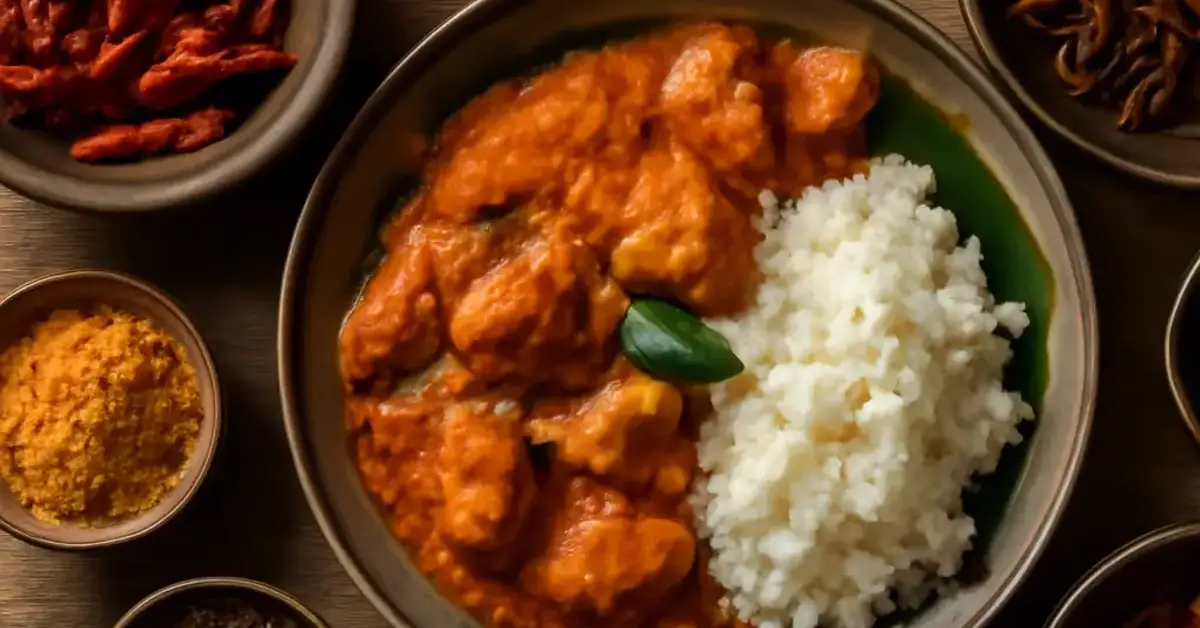
Today, nasi kandar has exploded into a national phenomenon. A typical plate includes steamed rice, a rich fish curry, fried chicken or beef rendang, and a dollop of sambal. What makes it distinctly Malaysian is the mixing of gravies—a technique borrowed from Indian thali but adapted to local tastes. The curry is often made with coconut milk, a nod to Malay cooking, while the fried chicken owes its crispiness to Chinese-style battering. This dish perfectly captures how Indian flavors Malaysian cuisine have evolved through collaboration. For a related guide, see Malaysian Cuisine Guide: 7 Must-Try Local Favorites and Expert Tips.
Curry Laksa Origins: When Indian Spices Met Chinese Noodles
The curry laksa origins are a beautiful example of culinary cross-pollination. Laksa itself has Peranakan (Straits Chinese) roots, but the curry version owes its soul to Indian spices. In the early 1900s, Chinese immigrants in Penang and Kuala Lumpur began adding Indian curry powder, coconut milk, and dried shrimp to their noodle soups. The result was a rich, spicy broth poured over thick rice noodles (laksa lemak) or thin vermicelli (curry mee).
Today, curry laksa is a staple at hawker centers across Malaysia. The broth carries the unmistakable warmth of Indian flavors Malaysian cuisine—turmeric, cumin, fennel, and curry leaves—while the toppings (fish cake, bean sprouts, tofu puffs) reflect Chinese influences. It is a bowl that tells the story of three cultures eating together.
Roti Canai: The Flaky Flatbread That Traveled from India
Roti canai originated as the Indian paratha, introduced by Tamil Muslim migrants. In Malaysia, the dough is stretched paper-thin, folded into layers, and cooked on a flat griddle with generous amounts of ghee or oil. The result is a flaky, crispy exterior with a soft, chewy interior. It is served with a side of dal or curry, and sometimes sweetened with condensed milk.
What makes roti canai quintessentially Malaysian is its versatility. Mamak stalls now offer creative variations: roti telur (with egg), roti bawang (with onion), and even roti bomb (stuffed with sweetened milk and crushed peanuts). This humble flatbread has become a comfort food for Malaysians of all backgrounds, proving that Indian influence Malaysia extends far beyond the kitchen—it is part of everyday life.
How Indian Cooking Techniques Blended into Malay and Chinese Kitchens
Beyond spices, Indian migrants brought cooking techniques that reshaped Malaysian home cooking. The practice of tempering spices in hot oil—tadka—is now used in Malay sambal and Chinese stir-fries. The slow simmering of rich, layered curries became the foundation for both Malay gulai and Chinese-style curry puffs.
Another major contribution is the concept of a mamak stall. These Indian Muslim-run eateries are open 24 hours and serve a menu that mixes Indian, Malay, and Chinese dishes under one roof. You can order a roti canai with a side of nasi lemak and a cup of teh tarik—all prepared by the same cook. This casual fusion is exactly what Indian flavors Malaysian cuisine represent: a living, breathing blend of traditions. For a related guide, see 7 Essential Malaysian Cuisine Tips for Authentic Dishes Today.
Useful Resources
For readers interested in deeper exploration, these two sources offer authoritative perspectives on the topic.
- Britannica: Malaysian Cuisine – A comprehensive overview of the country’s food history, including the Indian influence.
- SBS: Curry Laksa History and Recipe – An excellent article detailing the origins of curry laksa and its Indian spice connection.
Frequently Asked Questions About Indian flavors Malaysian cuisine
What are the most common Indian spices used in Malaysian cooking?
Turmeric, cumin, fennel, mustard seeds, curry leaves, cardamom, and chili are the most common Indian flavors Malaysian cuisine relies on.
What is the history of nasi kandar in Malaysia?
Nasi kandar history begins with Indian Muslim vendors carrying pots of rice and curry on bamboo poles through Penang in the early 1900s.
How did curry laksa get its name?
The name comes from the Peranakan word laksa for spicy noodle soup, combined with the use of Indian curry powder, explaining curry laksa origins.
Is roti canai originally from India?
Yes, roti canai is a Malaysian adaptation of the Indian paratha, introduced by Tamil Muslim migrants.
What is a mamak stall?
A mamak stall is an Indian Muslim-run eatery in Malaysia that serves a mix of Indian, Malay, and Chinese dishes, often open 24 hours.
What does “kandar” mean in nasi kandar?
“Kandar” refers to the bamboo pole used by vendors to carry pots of food, a key detail in nasi kandar history.
What is the difference between Malay and Indian curries?
Malay curries tend to be more coconut-rich and use local herbs like lemongrass, while Indian-influenced curries rely on ground spice blends and tamarind.
Why is turmeric so popular in Malaysian food?
Turmeric adds color, earthy flavor, and health benefits, making it a staple in both Indian and Malay cooking.
How did Indian migrants influence Malaysian breakfasts?
Indian migrants introduced roti canai, idli, and dosa, which are now common breakfast items at mamak stalls nationwide.
What is teh tarik?
Teh tarik is a pulled milk tea with cardamom and condensed milk, a specialty of Indian Muslim vendors.
Is curry laksa very spicy?
It can be, but the heat level varies. Many stalls offer mild to extra-spicy options, reflecting the balance of Indian flavors Malaysian cuisine.
What is the role of curry leaves in Malaysian cooking?
Curry leaves are used for aroma and flavor, typically fried in oil at the start of cooking to release their citrusy notes.
Can I find authentic Indian food in Malaysia?
Yes, especially in Little India districts of Kuala Lumpur, Penang, and Ipoh, where you can find both traditional and fusion dishes.
What is the difference between nasi kandar and nasi lemak?
Nasi kandar uses plain rice with multiple curries, while nasi lemak uses coconut milk rice and is typically served with sambal, anchovies, and egg.
How did India contribute to Malaysian street food culture?
Indian migrants introduced the concept of mobile food vending (kandar) and the mamak stall, which form the backbone of Malaysian street food.
What is a typical Malaysian Indian breakfast?
A typical breakfast includes roti canai with dal or curry, or a plate of idli with sambar and chutney.
Are there vegetarian options in Malaysian Indian cuisine ?
Yes, many dishes are vegetarian, especially from South Indian traditions—such as vegetable curries, dosa, and rice dishes.
What is the most popular Indian dish in Malaysia?
Roti canai is arguably the most popular, loved by all ethnic groups for its affordability and versatility.
How do Indian, Malay, and Chinese flavors combine in one meal?
A typical mamak meal might include Indian roti canai, Malay sambal, and Chinese-style fried noodles—all on one plate.
What is the future of Indian flavors in Malaysian cuisine?
As chefs continue to experiment, Indian flavors Malaysian cuisine will keep evolving, blending with global trends while honoring its roots.