

Malaysian Cuisine Explained Key Takeaways
Malaysian Cuisine Explained is a journey through seven distinct regional food profiles, from the fiery wok-hei of Penang to the creamy coconut-rich curries of the East Coast.
- Northern states like Penang and Kedah are known for bold, spicy, and sour flavors, with iconic street dishes like char kway teow and asam laksa .
- Central Malaysia (Kuala Lumpur and Selangor) is a melting pot of Malay, Chinese, and Indian influences, producing hybrid dishes such as nasi lemak and roti canai .
- East Coast states (Kelantan, Terengganu, Pahang) favor sweet, creamy flavors from coconut milk and palm sugar, exemplified by nasi dagang and keropok lekor .
Why Understanding Malaysian Cuisine Explained Matters for Food Lovers
Malaysia sits at the crossroads of maritime Southeast Asia, and its food tells a story of centuries of trade, migration, and cultural exchange. For anyone exploring flavors of Malaysia, knowing the regional differences transforms a simple meal into a deeper appreciation of the country’s heritage. Whether you are planning a food trip or simply curious about regional Malaysian food, this guide will help you navigate the diverse culinary landscape with confidence. For a related guide, see Malaysian Cuisine Seafood Dishes: 7 Essential Plates You Must Try.
The Foundation: Four Key Influences on Malaysian Cuisine
Before diving into regions, it helps to understand the four pillars that shape all Malaysian food guide recommendations: Malay (bumbu-based curries and rempah), Chinese (wok-fried noodles and soy sauces), Indian (tandoori breads and spice blends), and indigenous (foraged herbs and fermented proteins). Every regional style is a unique combination of these four streams.
Northern Malaysia: Spicy, Sour, and Wok-Hey
The northern states of Penang, Kedah, Perlis, and northern Perak are famous for the most intense flavors of Malaysia. The cuisine here is heavily influenced by Thai and Nyonya (Peranakan) cooking, resulting in dishes that are simultaneously spicy, sour, salty, and sweet.
Penang: Street Food Capital
Penang is arguably the most famous food destination in Malaysia. The island’s char kway teow — flat rice noodles stir-fried over high heat with prawns, Chinese sausage, bean sprouts, and a dark soy sauce — exemplifies the technical skill of Penang hawkers. Another must-try is asam laksa, a sour fish-based noodle soup flavored with tamarind, lemongrass, and torch ginger flower. The sourness comes from tamarind (asam), while the heat comes from a generous helping of chili paste.
Kedah and Perlis: Rice Bowl and Simpler Spices
Kedah is known as Malaysia’s rice bowl, so it is no surprise that nasi ulam — rice mixed with finely shredded herbs, dried shrimp, and toasted coconut — is a signature dish. The flavors are more herbal and less fiery than Penang. Pekasam is a fermented freshwater fish specialty that divides opinion: it is pungent, salty, and deeply umami, often enjoyed with plain rice and fresh vegetables.
Central Malaysia: The Multicultural Melting Pot
Kuala Lumpur and the surrounding state of Selangor are home to a truly cosmopolitan food scene. Because the capital attracts migrants from every state and ethnicity, you will find dishes from all over the country — but some creations are distinctly Central.
Nasi Lemak: Malaysia’s National Dish
While you can eat nasi lemak anywhere in Malaysia, the version in Kuala Lumpur has evolved into a full meal: fragrant coconut rice served with spicy sambal, crispy anchovies, roasted peanuts, a hard-boiled egg, and a side of fried chicken or beef rendang. The sambal in KL tends to be sweeter and less fiery than the northern style, reflecting the Cantonese influence on local taste buds.
Roti Canai and Mamak Culture
The Indian-Muslim (Mamak) community has given Kuala Lumpur its beloved roti canai — a flaky, crispy flatbread served with dhal or curry. The dough is stretched thin, folded, and cooked on a flat iron griddle until golden. Mamak stalls are open 24 hours, making them the social heart of KL’s late-night food scene. A side of teh tarik (pulled milk tea) completes the experience.
East Coast: Sweet, Creamy, and Coconut-Laden
The east coast states of Kelantan, Terengganu, and Pahang are culturally close to Thailand and the Malay sultanates. The cuisine relies heavily on coconut milk (santan), palm sugar (gula Melaka), and fresh seafood. The result is a noticeably sweeter profile compared to the north.
Kelantan: Sweet Tooth Paradise
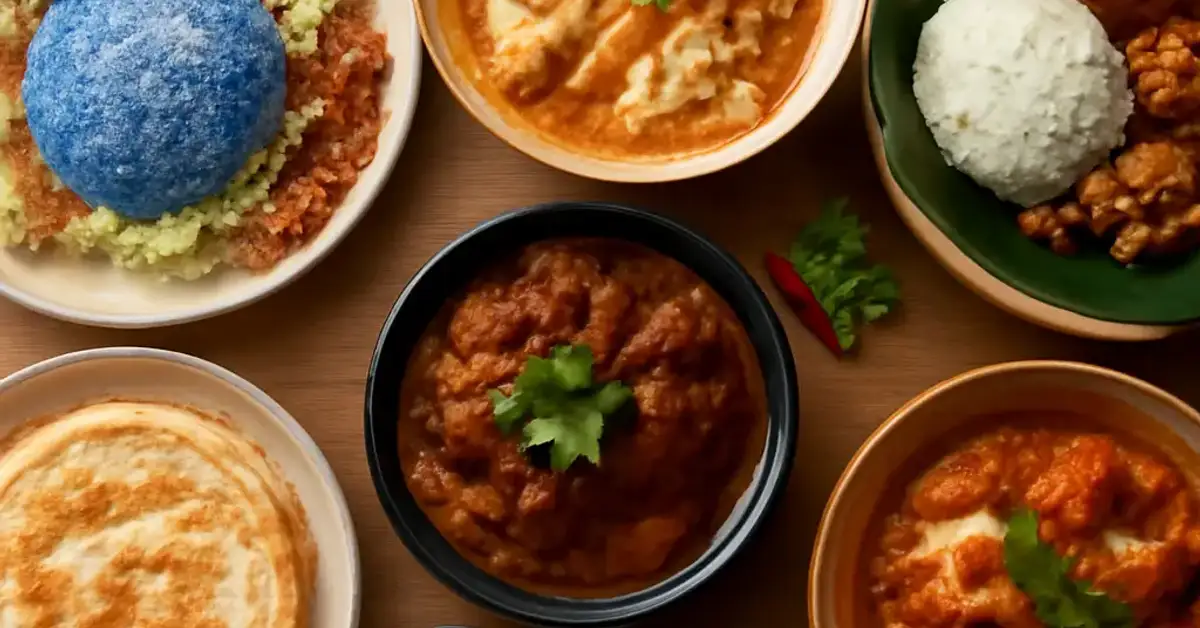
Kelantanese food is famously sweet. Nasi kerabu is a blue-colored rice dish (the color comes from butterfly pea flowers) served with salted eggs, dried fish crackers, pickles, and a mound of budu — a fermented anchovy sauce that balances the sweetness. Akok is a steamed egg-based dessert similar to a custard cake, rich with coconut milk and palm sugar.
Terengganu: Seafood and Keropok
Keropok lekor is Terengganu’s most famous export: fish sausages made from mackerel and sago flour, deep-fried and served with a sweet chili dip. The state also produces exceptional nasi dagang, a steamed glutinous rice dish cooked with coconut milk and eaten with curried tuna and pickled vegetables. The rice has a fluffy, slightly sticky texture that is unique to this region.
Sabah and Sarawak: Borneo’s Wild Flavors
The two Malaysian states on Borneo island have a cuisine that is entirely distinct from Peninsular Malaysia. Indigenous tribes such as the Kadazan-Dusun in Sabah and the Iban in Sarawak contribute ingredients like bamboo shoots, wild ferns, and fermented durian (tempoyak).
Sabah: Sour and Fresh
Hinava is a Kadazan-Dusun ceviche made with fresh raw fish marinated in lime juice, chili, and grated ginger. It is not cooked, only cured by the acid, and has a bright, clean flavor. Another specialty is bosou, a fermented pork or fish dish that has a pungent kick similar to Korean kimchi. Sabahans also love tuaran mee, egg noodles stir-fried with a local soy sauce that is sweeter and thicker than standard soy.
Sarawak: Laksa and Pepper
Laksa Sarawak is perhaps the state’s most recognizable export. Unlike the sour Penang version or the curry-heavy Singapore laksa, Sarawak laksa has a creamy coconut broth seasoned with sambal belacan (shrimp paste) and topped with shredded chicken, prawns, and a squeeze of lime. Sarawak is also the largest pepper producer in Malaysia, and the local white and black pepper varieties are prized by chefs worldwide. Umai, a raw fish salad similar to hinava but made with sliced fish and calamansi lime, is another refreshing dish from the coastal communities.
How Regional Differences Unite into a National Identity
When you step back, the seven regional profiles — Northern (spicy-sour), Central (multicultural hybrid), East Coast (sweet-creamy), Sabah (sour-fermented), and Sarawak (coconut-pepper) — are not contradictions but complementary pieces of the same mosaic. A Malaysian Cuisine Explained journey reveals that the country’s strength lies in its diversity. The same love for rice, sambal, and fresh herbs runs through every region, but each community adds its own local twist. That is why a single trip across Malaysia can feel like eating your way through ten different countries — all while staying firmly within one national family.
Practical Tips for Exploring Regional Malaysian Food at Home
If you cannot travel to Malaysia right now, you can still simulate the experience by sourcing key ingredients from Asian grocery stores or online retailers. Here is a quick checklist:
- Northern: Tamarind paste, dried chili flakes, preserved radish (chai poh).
- Central: Coconut cream, shrimp paste (belacan), curry powder.
- East Coast: Palm sugar, pandan leaves, fresh mackerel.
- Sabah and Sarawak: Bamboo shoots, tempoyak (fermented durian), Sarawak pepper.
Start with one dish per region — for example, cook asam laksa from the north one week, then nasi dagang from the east coast the next. This slow exploration will help you appreciate how geography and history shape the flavors of Malaysia.
Useful Resources
For a deeper dive into Malaysian cooking techniques and authentic recipes, visit Rasa Malaysia, a trusted source for traditional and modern Malaysian dishes. To learn more about the cultural history behind each region, the official Malaysia Tourism website offers detailed food heritage trails and guides.
Frequently Asked Questions About Malaysian Cuisine Explained
What is Malaysian cuisine known for?
Malaysian cuisine is known for its bold, complex flavors that combine spicy, sour, sweet, and savory elements in one dish. It is heavily influenced by Malay, Chinese, Indian, and indigenous cooking traditions. For a related guide, see Malaysian Cuisine Guide: 7 Must-Try Local Favorites and Expert Tips.
How many regional cuisines are there in Malaysia?
Most food experts recognize seven major regional profiles: Northern (Penang, Kedah), Central (Kuala Lumpur, Selangor), East Coast (Kelantan, Terengganu, Pahang), Sabah, and Sarawak. Each has distinct ingredients and cooking styles.
What is the most popular dish in Malaysia?
Nasi lemak is widely considered Malaysia’s national dish. It consists of coconut rice, spicy sambal, anchovies, peanuts, and boiled egg, and is eaten for breakfast, lunch, or dinner across all regions.
Is Malaysian food very spicy?
Spice levels vary by region. Northern and central dishes tend to be spicier, while East Coast and Sarawak cooking is milder and sweeter. You can always ask for less chili when ordering.
What is the difference between laksa Penang and laksa Sarawak?
Penang laksa is sour and fish-based with tamarind and no coconut milk. Sarawak laksa is creamy with coconut milk, sambal, and a milder spice profile, often topped with chicken and prawns.
What is keropok lekor?
Keropok lekor is a deep-fried fish sausage from Terengganu, made from mackerel and sago flour. It has a chewy texture and is typically served with a sweet chili dipping sauce.
Is roti canai Indian or Malaysian?
Roti canai is of Indian origin but has been fully adopted into Malaysian cuisine, especially by the Mamak (Indian-Muslim) community. It is now considered a Malaysian staple.
What is the key ingredient in East Coast cooking?
Coconut milk (santan) and palm sugar (gula Melaka) are essential in East Coast cuisine. They give dishes a rich, creamy sweetness that defines the region’s flavor profile.
What is hinava?
Hinava is a Kadazan-Dusun ceviche from Sabah, made with raw fish marinated in lime juice, chili, and grated ginger. It is not cooked, only cured by the acid, and served cold.
What is budu?
Budu is a fermented anchovy sauce from Kelantan and Terengganu. It has a salty, umami-rich flavor and is used as a dipping sauce or seasoning in many local dishes.
Is Malaysian food similar to Thai food?
There is some overlap, especially in the northern states that border Thailand, such as the use of tamarind, lemongrass, and chili. However, Malaysian cuisine is generally less sweet and more coconut-heavy than Thai cuisine.
What is the best time to eat street food in Malaysia?
Evening and night markets (pasar malam) are the best times for street food. Hawker stalls usually open around dinner time and stay open until late. Breakfast is also popular for nasi lemak and roti canai.
Can vegetarians enjoy Malaysian cuisine ?
Yes, though it requires some planning. Many dishes use shrimp paste or fish sauce, but you can find vegetable versions of nasi lemak, roti canai, and char kway teow. Indian vegetarian options are also widely available.
What is the national drink of Malaysia?
Teh tarik, or pulled milk tea, is the unofficial national drink. It is a sweet, frothy tea made by pouring the tea back and forth between two cups to create a creamy foam.
What is gula Melaka?
Gula Melaka is palm sugar made from the sap of coconut or arenga palm flowers. It has a rich, caramel-like flavor and is used in desserts and savory dishes, especially in the East Coast.
Is Malaysian food halal?
Most Malaysian food is halal, especially in Malay and Indian-Muslim establishments. Chinese and non-halal restaurants are clearly labeled, so you can choose according to your dietary requirements.
What is the most famous dessert in Malaysia?
Cendol is the most beloved Malaysian dessert: shaved ice topped with green rice-flour jelly, coconut milk, palm sugar syrup, and red beans. It is refreshing and sweet.
What is the meaning of ‘mamak’ in Malaysian food?
Mamak refers to Indian-Muslim food stalls that serve dishes like roti canai, nasi goreng, and mee goreng. Mamak culture is central to Malaysian social life, with 24-hour operations. For a related guide, see Affordable Malaysian Cuisine Cafes in Kuala Lumpur: 7 Smart Budget Eats.
Can I find Malaysian ingredients outside Malaysia?
Yes, many Asian grocery stores in the US, UK, Australia, and Singapore stock Malaysian staples like belacan, sambal, curry powder, and keropok lekor. Online retailers also ship globally.
What is the best way to experience Malaysian food for a beginner?
Start with nasi lemak, roti canai, and char kway teow — these are mild, widely available, and showcase the core flavors. Then gradually try more adventurous regional dishes like nasi kerabu or hinava.