


must-try rice dishes in Malaysian cuisine Key Takeaways
From bustling street stalls to family kitchens, Malaysia’s love affair with rice is impossible to miss.
- The ultimate must-try rice dishes in Malaysian cuisine include nasi lemak , nasi kandar, and nasi kerabu, each offering a distinct flavour journey.
- Regional variations add depth—Penang’s nasi kandar is famously spicy, while Kelantan’s nasi kerabu bursts with blue pea flower colour.
- Pair these staples with local sambals, curries, and fried sides for a truly authentic Malaysian meal.
Why These Must-Try Rice Dishes in Malaysian Cuisine Deserve a Spot on Your Table
If you’ve ever wandered through a Malaysian pasar malam (night market), the aroma of coconut milk, lemongrass, and fried anchovies probably stopped you in your tracks. Rice isn’t just a side dish here—it’s the canvas for bold, layered flavours. Whether you’re a first-time visitor or a longtime fan of popular Malaysian cuisine, these rice plates tell the story of the nation’s diverse heritage. For a related guide, see Malaysian Cuisine Explained: 7 Regional Flavors You Can’t Miss.
Below, you’ll find seven iconic rice dishes that define Malaysian food culture. We’ve ranked them based on popularity, regional significance, and ease of finding them (or cooking them) outside Malaysia. For a related guide, see Penang Malaysian Cuisine Every Traveler Must Try: 7 Essential Dishes.
7 Must-Try Rice Dishes in Malaysian Cuisine – Ranked and Explained
1. Nasi Lemak – The National Breakfast (and Beyond)
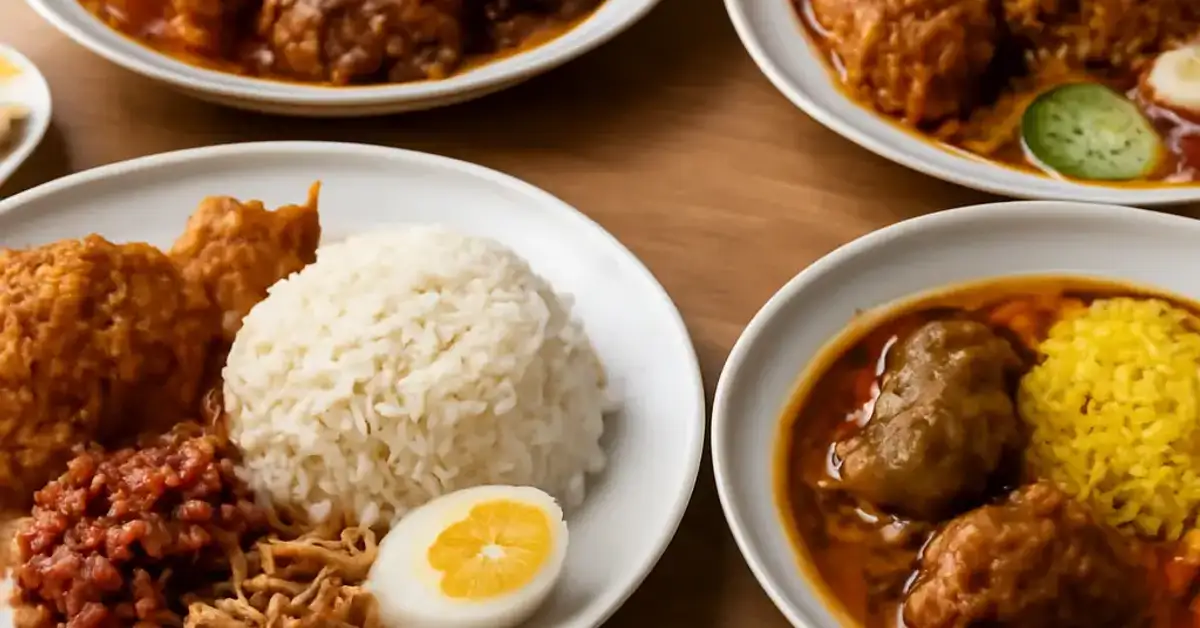
Nasi lemak is arguably the most famous of all Malaysian rice dishes. Fragrant rice cooked in coconut milk and pandan leaf is served with spicy sambal, crispy fried anchovies, roasted peanuts, a hard-boiled egg, and a slice of cucumber. Though traditionally a breakfast dish, you’ll find it at any hour.
Pro tip: Look for nasi lemak bungkus—the banana-leaf-wrapped version sold at roadside stalls. The leaf adds a subtle earthiness you won’t get from a plate.
2. Nasi Kandar – Penang’s Curry Rice Powerhouse
Originating from Penang’s Indian Muslim community, nasi kandar is a riot of saucy curries. You choose steamed rice, then pile on fried chicken, fish, okra, or hard-boiled eggs, all drenched in a mix of curry gravies. The name “kandar” comes from the carrying pole hawkers once used.
For the full experience, ask for banjir (“flooded”)—extra curry sauce poured over everything. It’s messy, glorious, and unforgettable.
3. Nasi Kerabu – The Blue Beauty from the East Coast
This vibrant dish hails from Kelantan and Terengganu. Nasi kerabu gets its striking blue colour from butterfly pea flower petals. The rice is served with a medley of herbs, shredded fish, salted eggs, and keropok (fish crackers). A splash of budu (fermented fish sauce) brings it all together.
It’s one of the most photogenic must-try Malaysian food items—and the flavour is just as memorable.
4. Nasi Dagang – A Breakfast Staple in the Northeast
Popular in Terengganu and Kelantan, nasi dagang is made from a mix of glutinous and regular rice, cooked in coconut milk. It pairs beautifully with gulai ikan tongkol (tuna curry) and pickled vegetables. The texture is slightly sticky, and the curry is rich but not overwhelmingly spicy.
If you visit the east coast, grab a banana-leaf wrap of nasi dagang from a morning market. It’s a quiet, comforting start to the day.
5. Nasi Briyani – The Festive Rice Dish
Malaysian nasi briyani blends Indian and Malay traditions. Basmati rice is layered with marinated chicken or mutton, caramelised onions, and a bouquet of spices—cardamom, cloves, saffron, and star anise. It’s often served during weddings, Hari Raya, and Deepavali.
For an everyday version, look for nasi briyani kampung (village style) sold at Malaysian street stalls. It’s typically plated with hard-boiled egg and a side of acar (pickled vegetables).
6. Nasi Lemuni – A Lesser-Known Herbal Gem
Don’t let its humble name fool you—nasi lemuni is a hidden treasure among Malaysian rice dishes, particularly for new mothers and health-conscious eaters. The rice is cooked with daun lemuni (a local herb believed to boost vitality), giving it a light green tint and a slightly bitter, earthy taste.
It’s traditionally served with fried chicken, sambal, and fried tempeh. You’ll mostly find it in rural Kedah and Perlis, but some Malaysian restaurants in major cities feature it as a daily special.
7. Nasi Himpit – The Festive Compressed Rice
Nasi himpit isn’t cooked in the usual way—steamed glutinous rice is compressed into dense squares, then cut into pieces. It’s a must-have during Hari Raya Aidilfitri and wedding feasts, usually served with rendang, satay, or kuah lodeh (vegetable coconut gravy).
The neutral, chewy texture makes it a perfect canvas for rich, spicy accompaniments. If you’re hosting a Malaysian-themed dinner, nasi himpit is an easy, make-ahead option.
How These Must-Try Rice Dishes Compare – Quick Reference Table
| Dish | Key Ingredient / Feature | Best Paired With | Region |
|---|---|---|---|
| Nasi Lemak | Coconut milk rice | Sambal, anchovies, egg | National |
| Nasi Kandar | Multiple curry gravies | Fried chicken, okra | Penang |
| Nasi Kerabu | Blue pea flower rice | Budu, salted egg | Kelantan/Terengganu |
| Nasi Dagang | Glutinous + regular rice | Gulai tuna, pickles | Terengganu |
| Nasi Briyani | Basmati + spices | Chicken/mutton curry | National (Indian-Malay) |
| Nasi Lemuni | Herb-infused rice | Fried chicken, sambal | Kedah/Perlis |
| Nasi Himpit | Compressed glutinous rice | Rendang, satay | National (festive) |
Which Must-Try Malaysian Food Plate Suits You Best?
Different moods call for different rice dishes. Here’s a quick personality guide:
- You’re a breakfast maximalist → go for nasi lemak. It’s satisfying, portable, and endlessly customisable.
- You crave a saucy, comforting bowl → nasi kandar is your match. The mix of curries is unbeatable on a rainy day.
- You love Instagram-worthy food with bold flavours → nasi kerabu delivers colour and punchy herbal notes.
- You want to impress guests at a dinner party → nasi briyani or nasi himpit with rendang creates a stunning spread.
- You’re curious about traditional health foods → track down nasi lemuni for its unique herbal profile.
Frequently Asked Questions About Must-Try Rice Dishes in Malaysian Cuisine
Useful Resources
For more on popular Malaysian cuisine, check out these guides:
Ready to Dive Into Must-Try Rice Dishes in Malaysian Cuisine?
Whether you’re planning a trip to Kuala Lumpur, Penang, or Kota Bharu—or simply exploring flavours in your own kitchen—these seven rice dishes offer a delicious gateway into Malaysia’s food soul. Start with nasi lemak for a safe bet, then challenge your palate with nasi kerabu or nasi kandar. Your taste buds will thank you.
Have you tried any of these dishes? Share your favourite in the comments below!
Frequently Asked Questions About must-try rice dishes in Malaysian cuisine
What is the most popular rice dish in Malaysia?
Nasi lemak is by far the most popular, often considered the national dish. It’s sold everywhere from street carts to upscale restaurants.
Are Malaysian rice dishes spicy?
Many, like nasi kandar and nasi kerabu, come with spicy sambals or curries, but there are milder options like nasi dagang and nasi himpit.
Can I find these dishes outside Malaysia?
Yes, especially in cities with large Malaysian or Southeast Asian communities, such as Singapore, Sydney, London, and New York.
What is nasi kandar gravy made of?
The gravy is a mix of several curries—usually fish, chicken, and mutton—blended together with spices like turmeric, cumin, and fenugreek.
Is nasi kerabu healthy?
It contains herbs, vegetables, and lean protein, but the budu sauce is high in sodium. Enjoy it in moderation.
What does nasi lemuni taste like?
It has a mild bitterness similar to spinach, with a fragrant herbal aroma. The rice is fluffy and slightly sticky.
Can I cook nasi lemak at home?
Absolutely. The key is using good-quality coconut milk and pandan leaves. Many recipes are available online.
What is the difference between nasi kandar and nasi briyani?
Nasi kandar uses plain steamed rice topped with multiple curries, while nasi briyani is spiced basmati rice cooked with marinated meat.
Is nasi dagang vegan-friendly?
The rice itself is vegan, but the typical curry uses tuna. You can request a vegetable curry at some stalls.
What is the blue colour in nasi kerabu?
It comes from butterfly pea flower (Clitoria ternatea) which is steeped in water before cooking the rice.
Where can I try authentic nasi lemuni?
Rural areas in Kedah and Perlis serve the most authentic versions. Some Malay restaurants in KL also feature it.
Is nasi himpit gluten-free?
Yes, since it’s made from glutinous rice, which is naturally gluten-free.
What is a typical nasi lemak sambal made of?
Chillies, shallots, garlic, belacan (shrimp paste), tamarind juice, and sugar are blended and cooked until thick.
Can I eat nasi kandar as a vegetarian?
Yes, many stalls offer vegetable curries, tofu, and tempeh. Just confirm the gravies are free of meat or fish stock.
What is the best time to eat nasi dagang?
It’s traditionally a breakfast dish, but you’ll find it available through early afternoon in Terengganu.
How is nasi himpit made?
Glutinous rice is steamed until tender, then pressed into a mould or wrapped tightly in banana leaves and left to set.
Why is nasi kerabu served with salted egg?
The salted egg balances the herbal and tangy flavours of the dish, adding richness.
Do Malaysians eat rice for every meal?
Rice is a staple for most, though noodles and bread are also common. Rice-based dishes appear at breakfast, lunch, and dinner.
Can I order nasi briyani without meat?
Yes, vegetable briyani is widely available, especially at Indian Muslim restaurants.
What drink goes best with nasi lemak ?
A cold teh tarik (pulled milk tea) or kopi ais (iced coffee) complements the spicy sambal perfectly.